
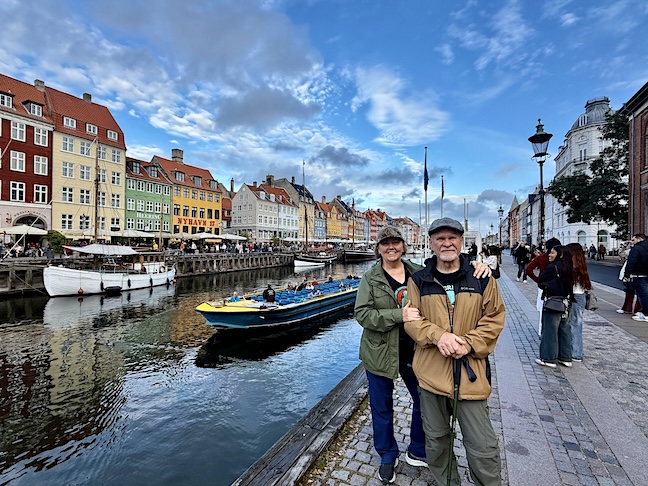
Our morning tour with local guide Benny took place in a deluge. I have to hand it to Rick Steves’ guides; no matter how treacherous the weather, they find a way to indoctrinate us with interesting facts and information, while herding the group into doorways, under overhangs, and other shelters.
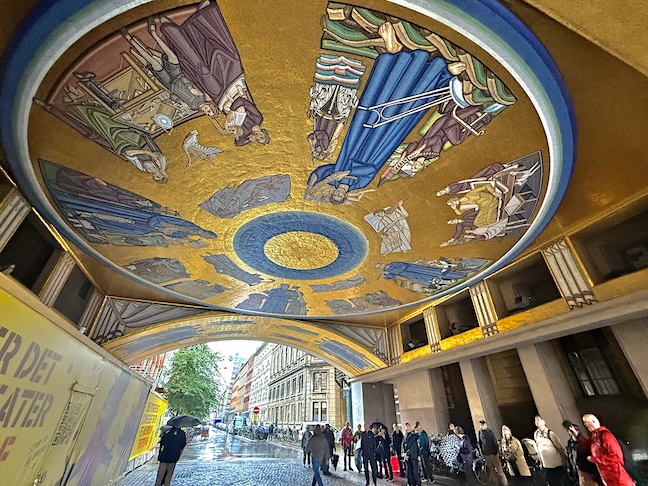
One hidden gem in a tunnel out of the rain is this historic mural depicting important Danish characters.
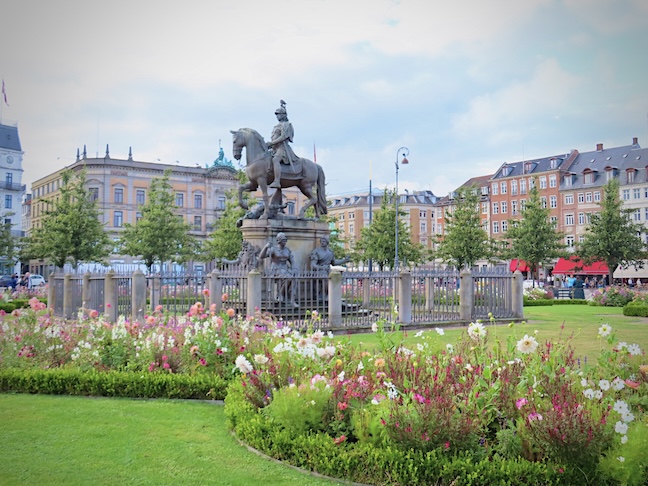
Kongens Nytorv spreads before the Royal Palace and is Copenhagen’s biggest public square. The square’s centerpiece is the equestrian statue of Christian V, King of both Norway and Denmark. Crowned in 1670, the King was generally liked by Scandinavians in both countries. Minerva and Hercules face the Charlottenborg Palace from one side of the plinth and represent prudence and strength. On the opposite side, Alexander the Great and Artemisia symbolize fortitude and honor.
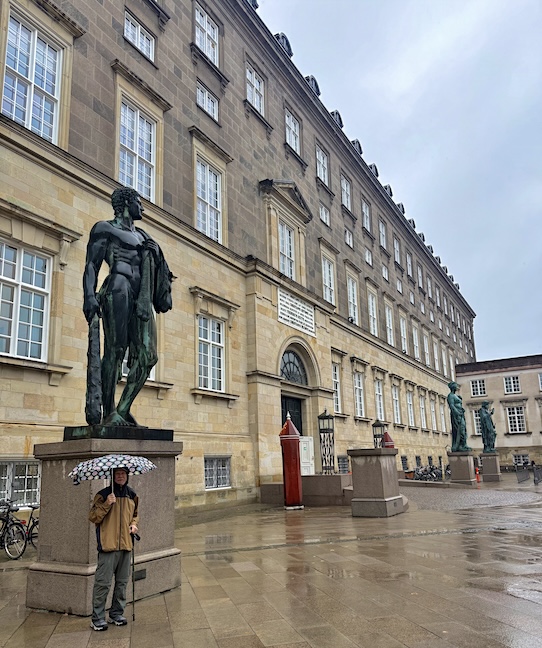
Bigger-than-life bronze statues, like Hercules behind me, guard the Christianborg Palace Courtyard. The palace is the seat of Denmark’s Parliament, the Prime Minister’s Office, and the Supreme Court.
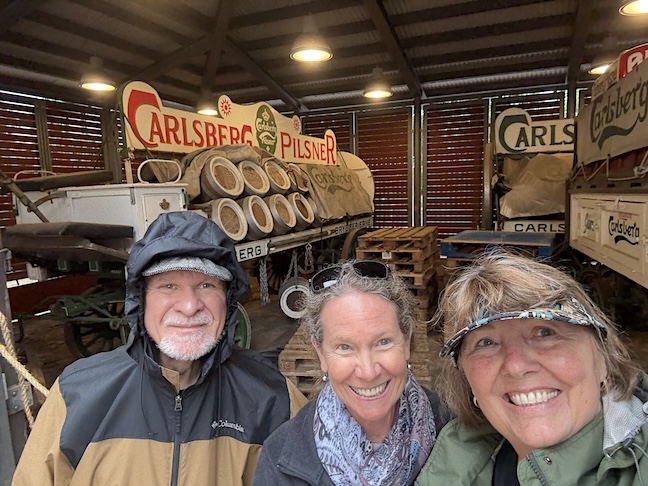
After the soggy tour, we had the rest of the day free. Kelly, Karen, and I hopped on the train to Carlsberg City District, where beer baron J.C. Jacobsen and his son Carl built the complexes that housed their breweries, offices for scientists, lawyers, engineers, transportation, and the Jacobsens’ homes, pioneering urban planning.
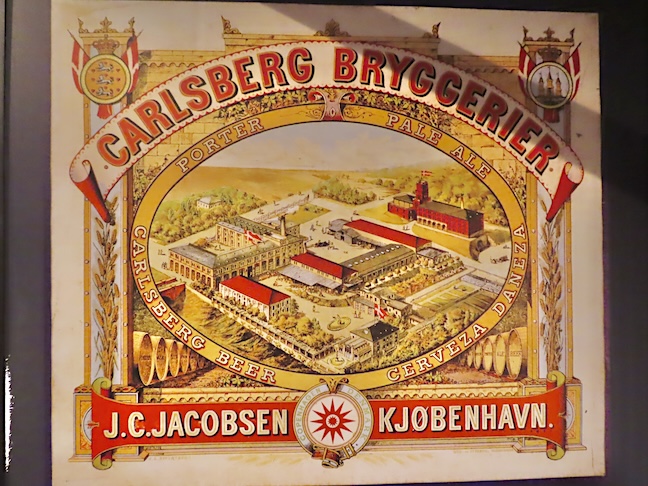
J.C. Jacobsen founded his original brewery in 1847, and his first beer was produced the same year. The world’s third-largest brewery was moved to Jutland in 2008. After fighting over modernizing and making new variations of their beer, Carl Jacobsen built his own brewery next to his dad’s in 1812 and capitalized on the family name, calling it Ny (New) Carlsberg. The father and son made peace and joined forces again in 1906. Carlsberg merged with Tuborg in 1970.
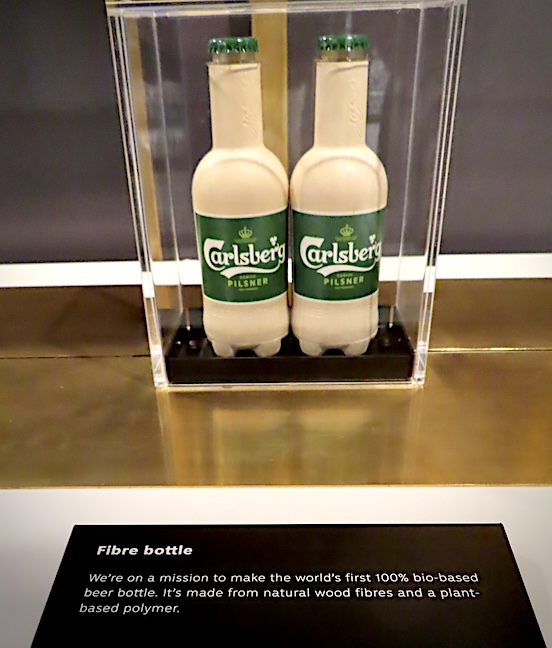
J.C. Jacobsen believed in the science of making better beer. His Carlsberg laboratory invented the pH scale and the method for purifying yeast, which he shared freely with the rest of the world’s brewers. Carlsberg promotes green industry and is working on perfecting the first bio-based beer bottle.
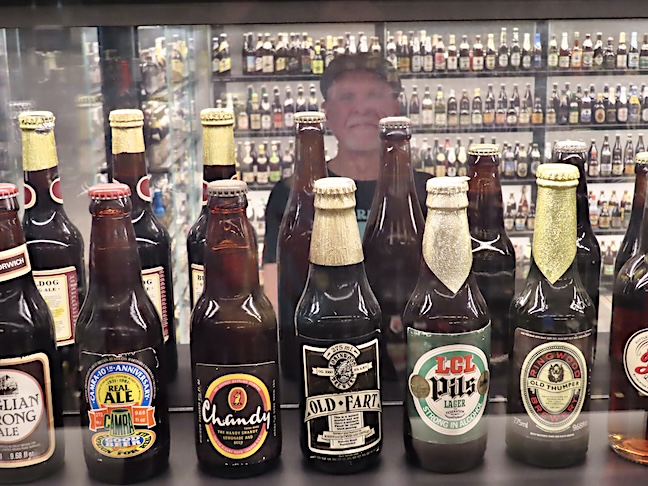
The Carlsberg Museum bottle collection contains 22,692 full bottles of beer from all over the planet, the oldest being Bass Ratcliff Ale from the United Kingdom, dated 1869. It’s mind-boggling.
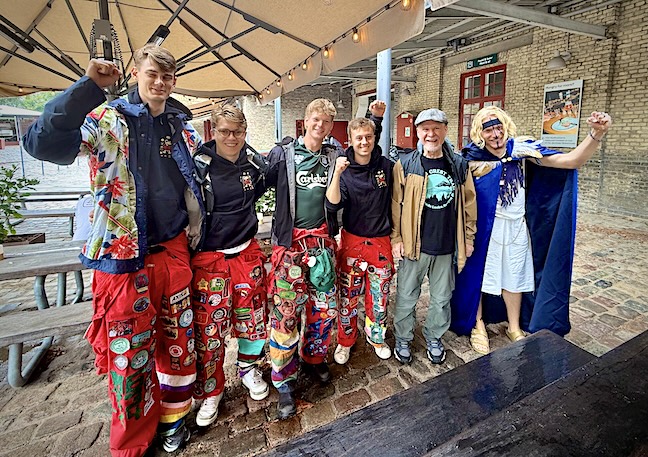
The Carlsberg exhibits are interactive and educational. Helping to make the time we spent rooting around in Carlsberg’s past were groups of college senior engineers with a day off from attending a conference in Copenhagen. Their youthful enthusiasm and friendliness added to the great time we had here.
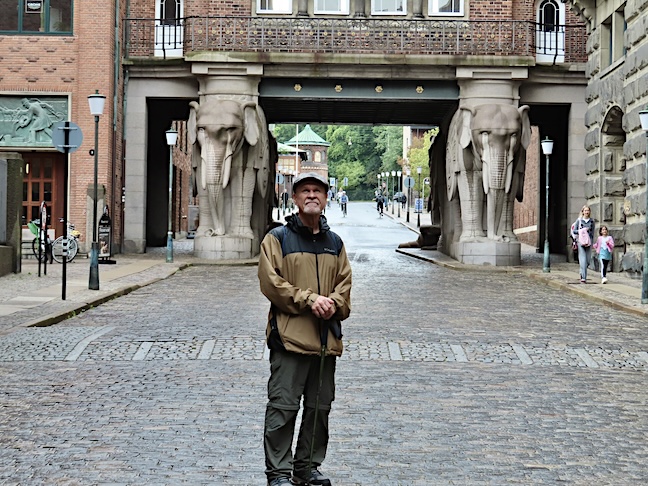
Carlsberg City District covers 74 acres. When our tour guide Heidi learned that we were headed to Carlsberg, she said, “Make sure you see the elephants.” We had no idea where to look or what they looked like. We questioned many locals in the area, and most had heard of the elephants, but none could tell us how to get there. We were searching for small statues when we stumbled onto the Elephant Tower. The elephants on this side of the gateway to the old brewery looked exhausted, but content, and would have been encountered by workers going home after a satisfying day of productive toil.
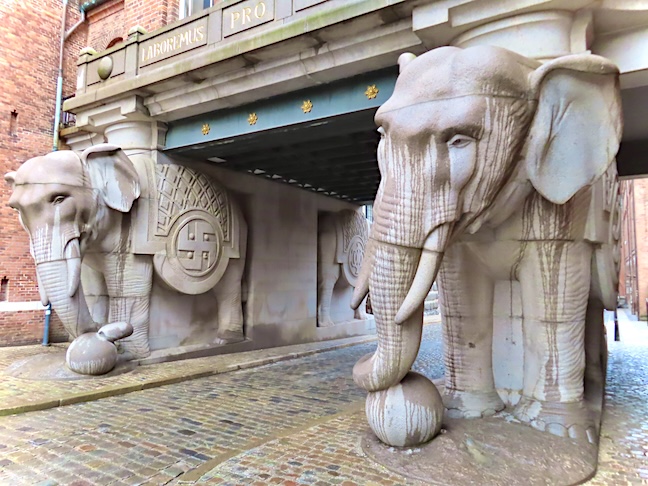
The elephants that workers passed on the way to the brewery are playful and look invigorated, like employees after a good night’s rest who are ready to complete their tasks. Yes, that’s a swastika on the elephant’s side. These sculptures were completed in 1901. Swastika is an ancient Sanskrit word meaning an object that is lucky, optimistic, and brings happiness. The official trademark that Carl adopted for Ny Carlsberg beer in 1882 became tarnished in the 1930s and was dropped completely in 1940, as the Nazis rose to prominence.
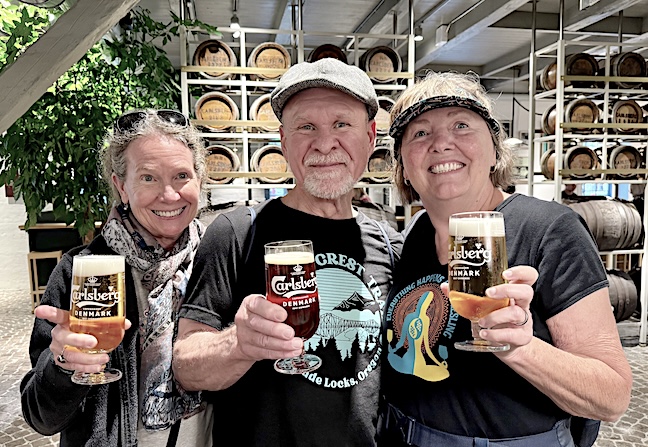
Our rainy-day tour, museum walks, and Carlsberg City District explorations racked up 24,343 steps. Kelly, Karen, and I rewarded ourselves with cold Carlsberg from the freshest taps in Copenhagen. Skål!