
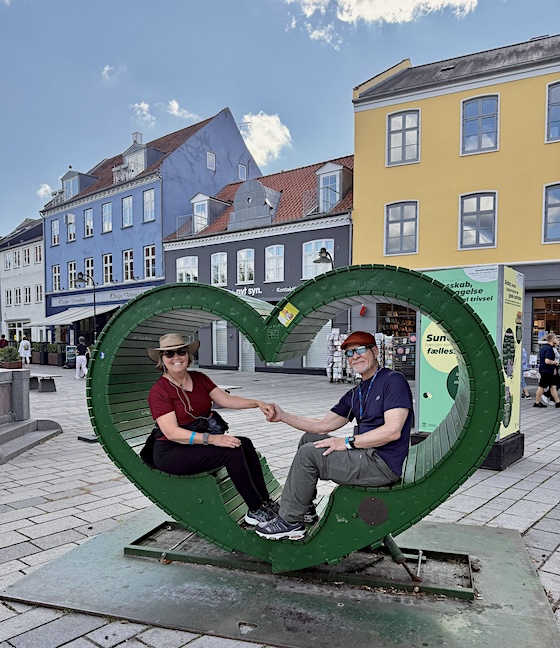
We left Copenhagen on a plush bus. Our day’s final destination would be Aero Island. Our first stop was the Viking Ship Museum in Roskilde.
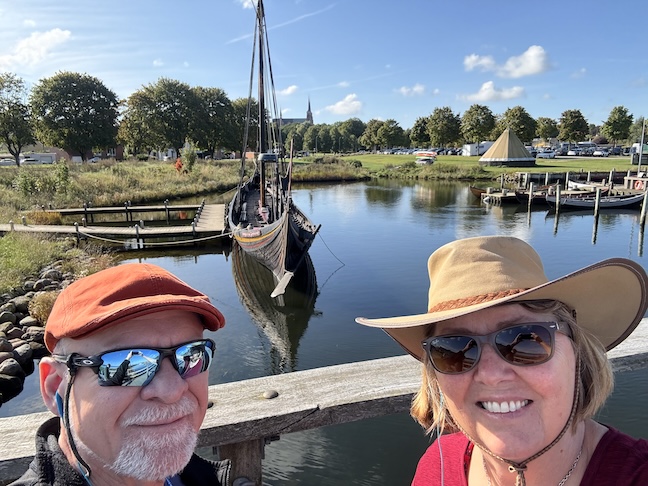
The Viking Ship Museum houses the remains of five original Viking ships that were intentionally sunk in Roskilde Fjord around 1070 to block the waterway and protect Roskilde from raiders.
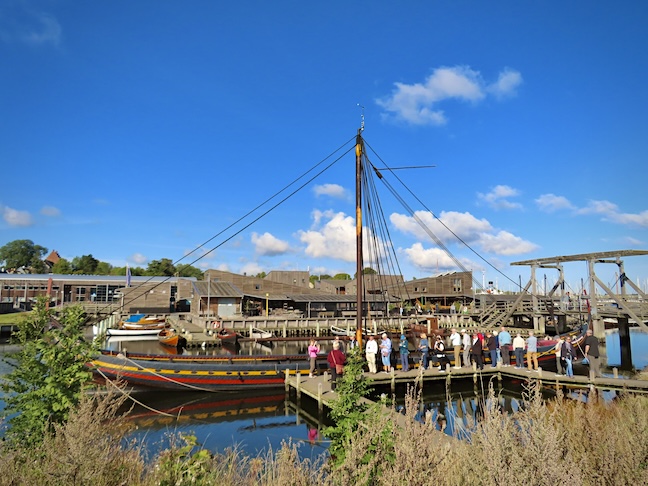
The museum’s harbor contains more than 40 Viking ship replicas and historic boats from all over Scandinavia. Visitors can sail and row on Roskilde Fjord in Nordic boats and get their Viking on.
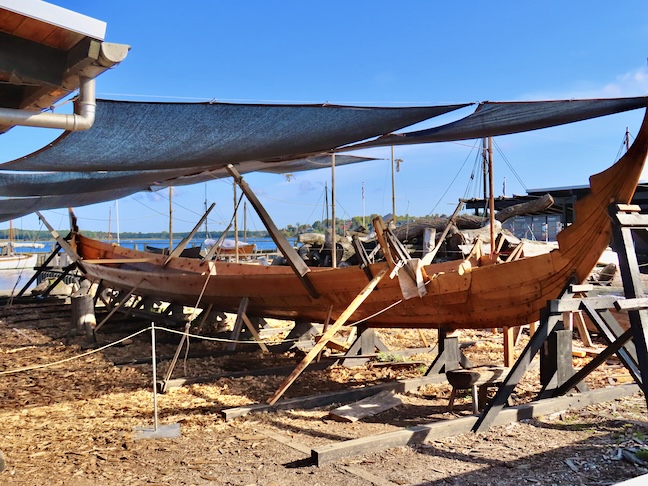
The museum’s boatyard has skilled artisans who utilize the same materials and techniques that the Vikings used 1000 years ago.
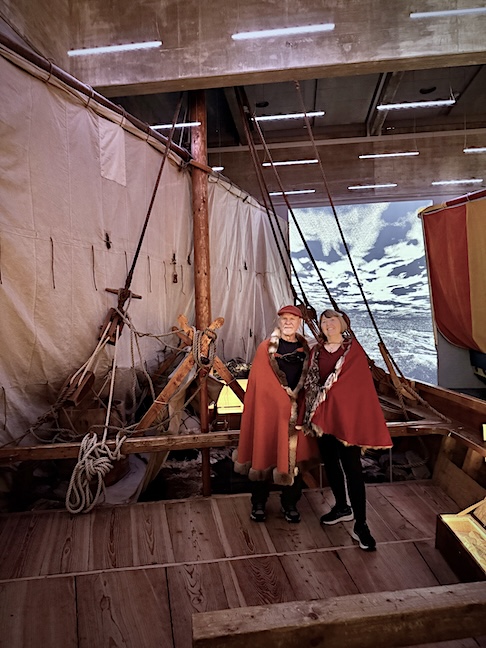
Interactive exhibits in the museum allow visitors to dress in Viking attire and step aboard replica ships to experience being at sea, complete with video and sound effects.
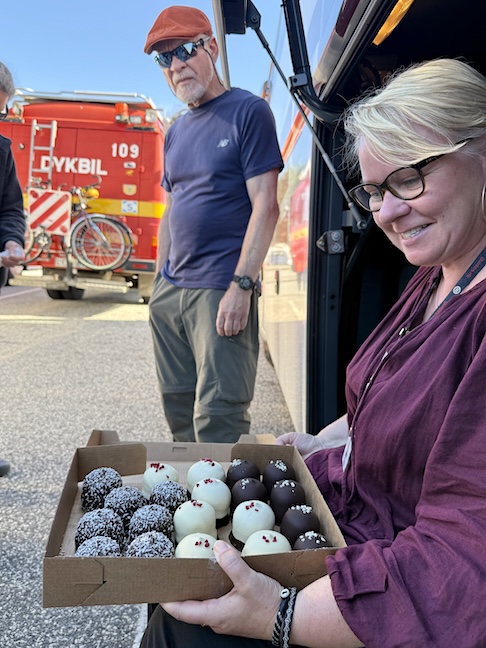
Our Rick Steves’ tour guide, Heidi, treated us to Flødebollers, which are Danish Marshmallow Puffs. These marzipan cookies were topped with whipped vanilla egg whites and dipped in assorted icing flavors with sprinkles on top. Perfect for the next leg of our bus ride to Roskilde Cathedral.
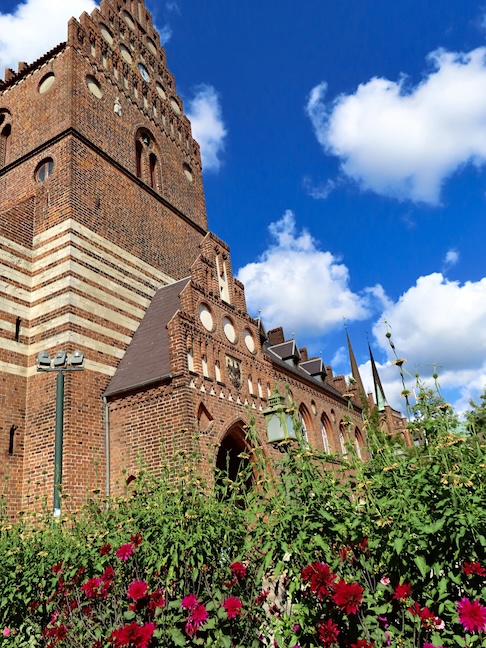
The Roskilde Cathedral is the first Gothic cathedral built of bricks. The art of fired bricks came to Denmark from Italy in 1160, and they were used to build the new cathedral around the old one so services could continue during construction.
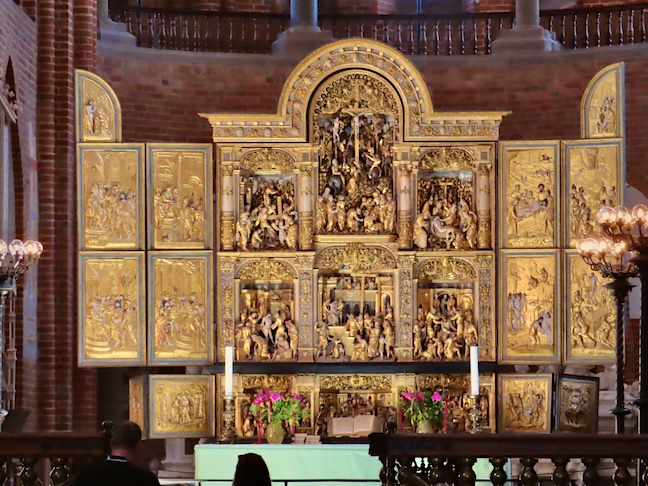
The Golden Altarpiece displays Christ’s passion with gilded silver figures and detailed enamel craftsmanship created by Danish masters around 1560.
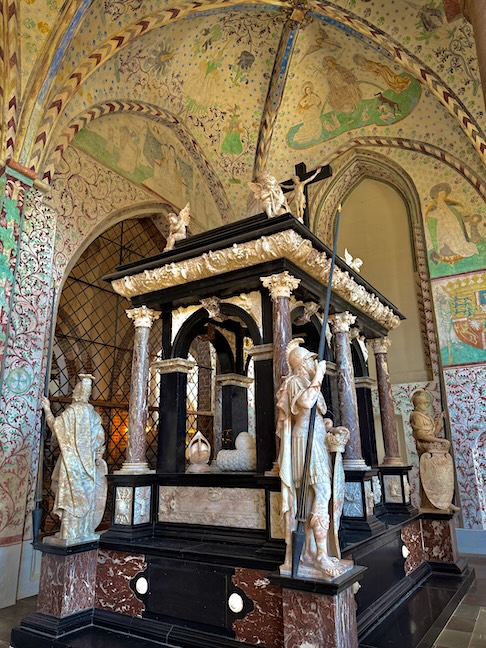
Roskilde Cathedral has been the main burial site for Danish monarchs since the early 15th century. Thirty-nine kings and queens are entered within the cathedral’s walls. The largest and most decorated sarcophagus belongs to Christian IV, whose reign was the longest in Danish history.
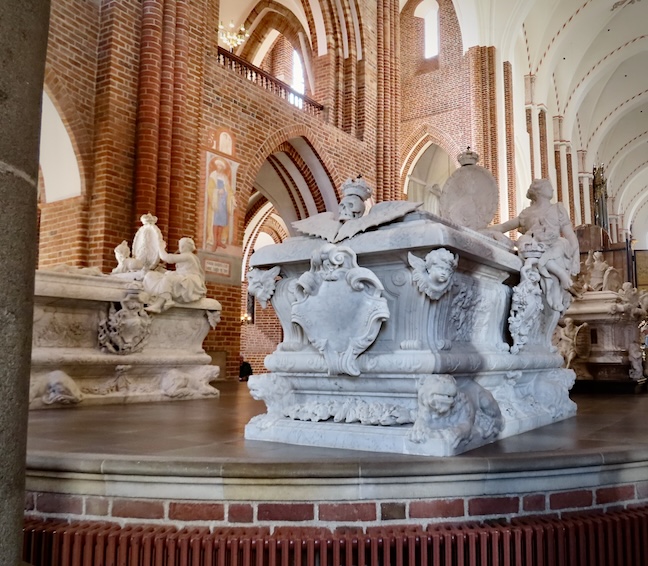
It is believed that the first Viking king, Harald Bluetooth, was entombed at an unknown location among these many monarchs around 985m, which would make Roskilde Cathedral the oldest continually used burial church in Denmark.
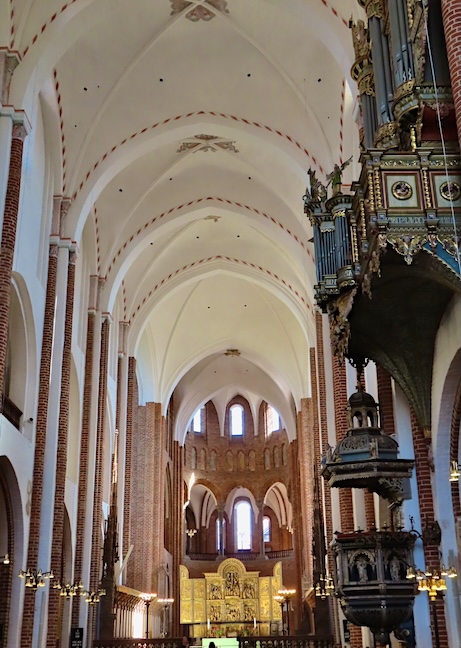
Numerous expansions resulted in the 282-feet-long, 89-feet-wide cathedral, with twin copper spires that extend 263 feet toward heaven.
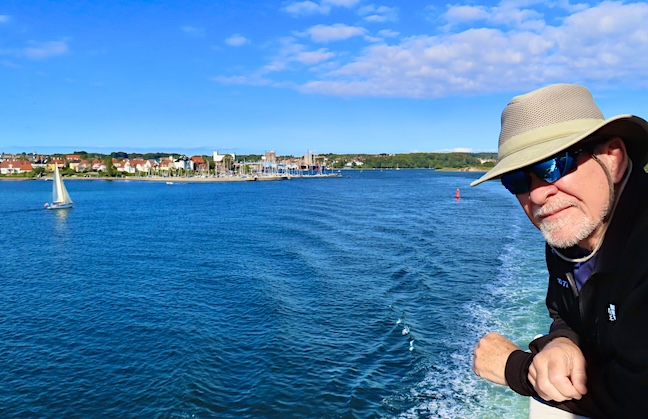
We sailed on the ferry from Svendborg to Ærøskøbing across the Baltic Sea on Aero Island for our last leg of a busy travel day. The one-hour and fifteen-minute cruise was beautiful.
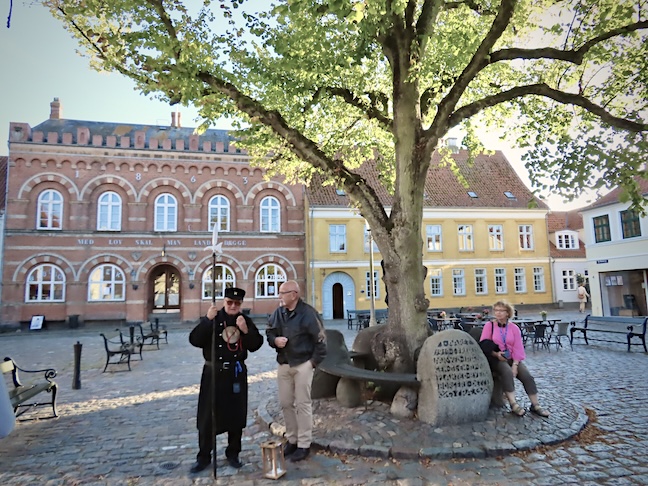
Our local guide for orientation to Aero Island played the part of an Ærøskøbing night watchman. The central square in Oldtown was cobblestoned and colorful.
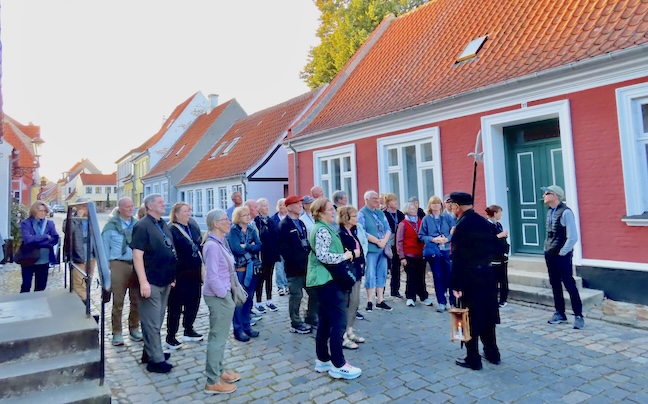
Ærøskøbing has a rich maritime history, resulting in the town’s men being gone for long periods of time. The wives left behind placed ceramic dogs in their front windows that faced out when their husbands were away, telling their secret lovers all was clear for visits. The dogs looked inward when their hubbies were home.
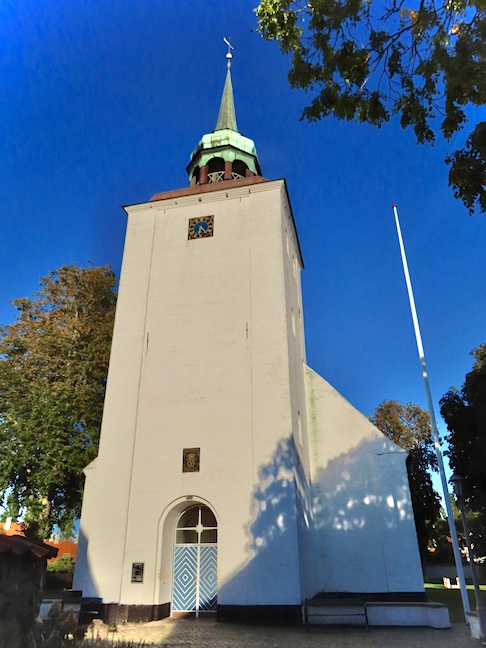
The ancient ÆRØSKØBING Church has a baptismal font from the 13th century and its pulpit was donated by Duke Pilip of Lyksborg in 1634.
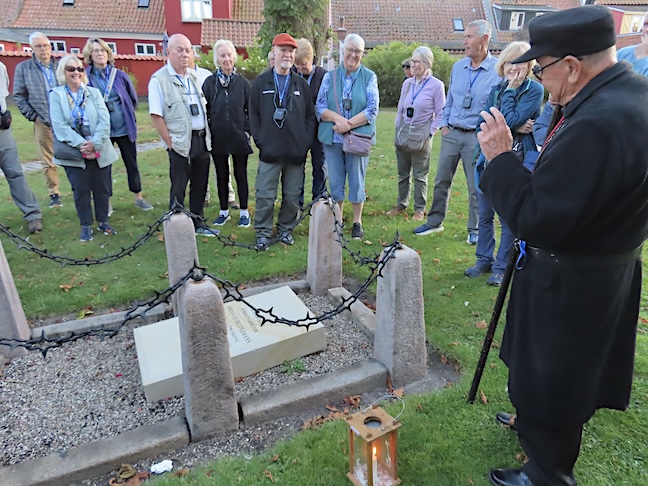
There is only one grave outside the Ærøskøbing Church. Its occupant’s lover is entered 20 feet away, just inside the church’s wall. Legend says the lovers were not allowed to be buried inside the church together, and at night, people hear the lovers conversing.
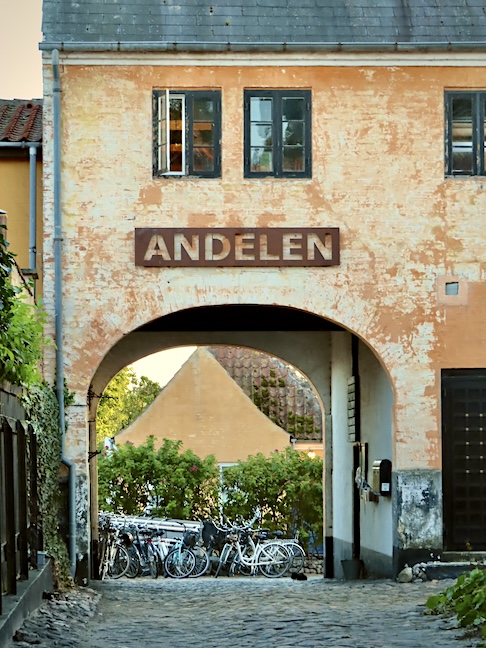
We were allowed to choose bikes for exploring the next morning. Karen and I picked out sturdy cruisers and were off to take in the beautiful island’s sites, which is the story for my next Scandinavian travel installment.