
Our Stockholm resident and passionate guide, Hokum, met our tour group early at Stockholm City Hall to show off the city’s most prominent building.
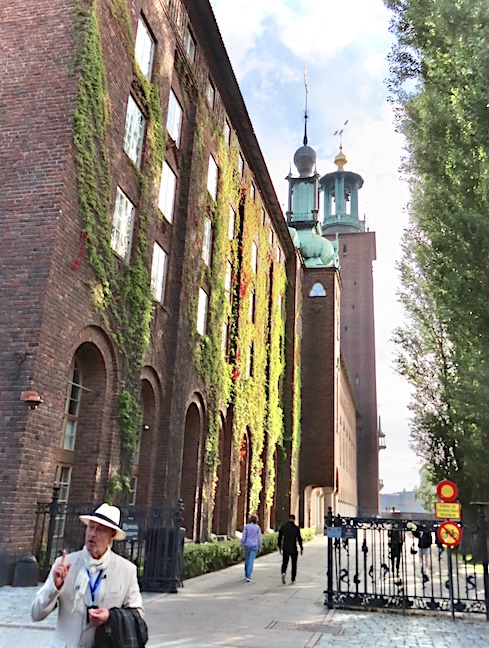
Completed in 1923, Stockholm’s City Hall was styled like an Italian Renaissance palace and required nearly eight million red bricks to construct. The 348-foot-tall tower was topped with Three Crowns (Tre Kronor), which is the Swedish National Symbol, and sits on the farthest eastern tip of Kungsholmen Island.
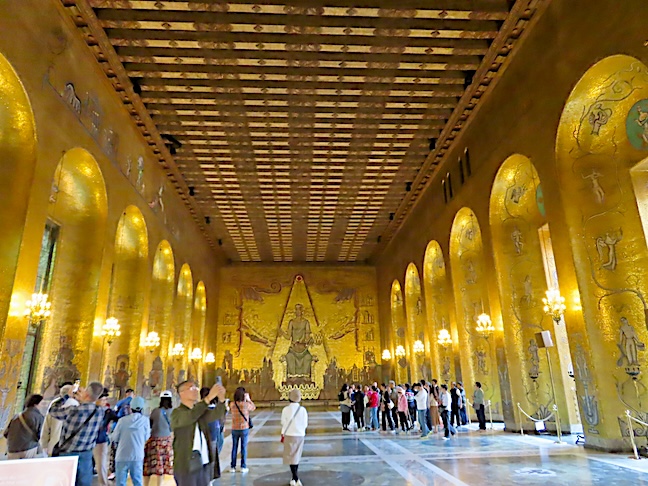
The annual Nobel Prize ceremony banquet is held in City Hall’s Blue Hall, which is actually red because architect Ragnar Östberg fell in love with the exposed red brick and refused to use the planned blue tiles to cover them. Blue Hall has an organ with 10,270 pipes. Above Blue Hall, the Nobel Banquet dance party happens in Golden Hall with a Byzantine-style mosaic made from 18,600,000 pieces of gold leaf sandwiched between 2 glass plates depicting scenes from Swedish mythology and legends.
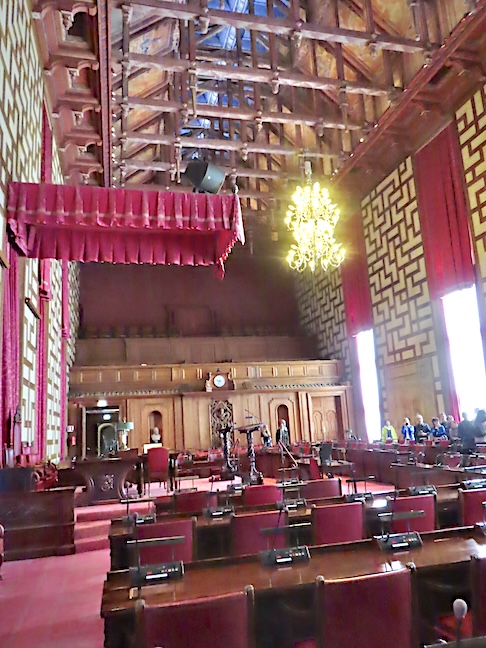
Stockholm’s 101 councillors meet in this ornate Council Chamber. Its ceiling resembles the open roof of a Viking longhouse. The building also contains offices and meeting rooms for over 200 politicians and civil servants.
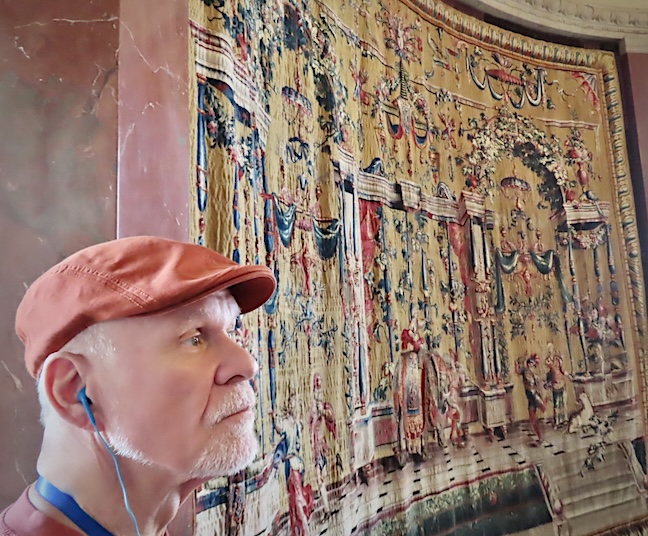
The walls of City Hall’s Oval Room are covered with 300-year-old French tapestries. The Oval Room hosts so many weddings that their ceremonies only last 40 seconds. “Stadshuset” is no ordinary city hall, and there is so much more to learn about and see here, but we must be moving on.
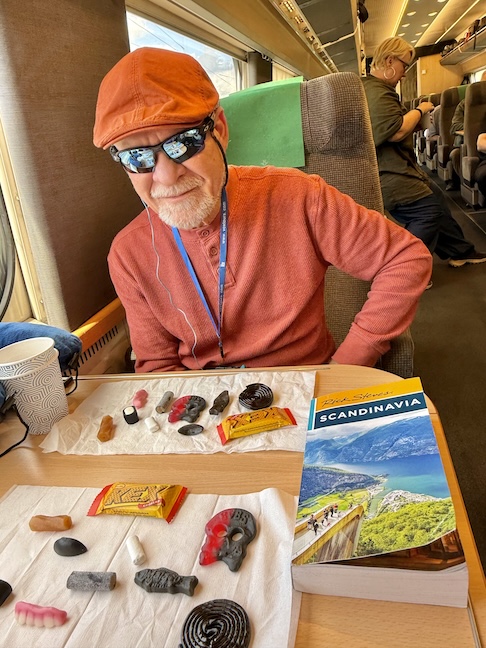
The train for our 4-hour ride to Copenhagen from Stockholm was clean and comfortable. Our guide, Heidi, bought everyone an assortment of licorice candies to savor on our trip. Scandinavians love candy, and like Heidi, licorice is their favorite treat. I tasted each variety, which resulted in my godawful face every time.
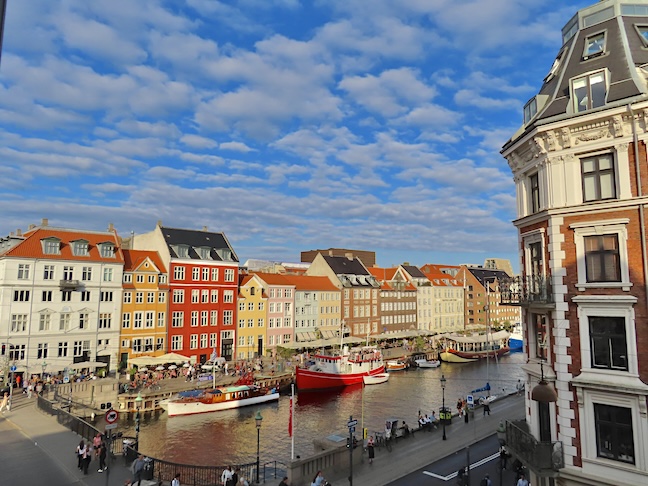
Our room in Hotel Bethel has an excellent view of the Nyhavn Canal and is located in Copenhagen City Centre. Hotel Bethel was a sailor’s hostel and houses the only seamen’s church in Denmark, located in a 200-year-old warehouse building in their courtyard.
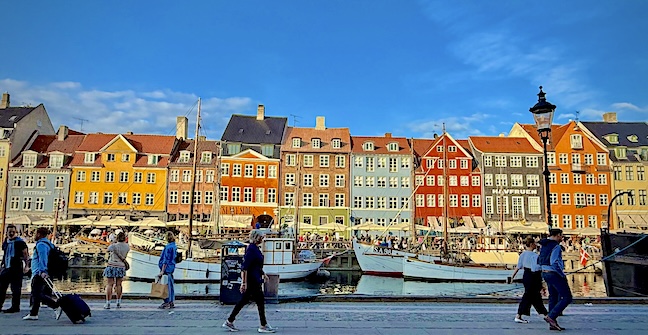
Sailors from around the world made their way to the bawdy cafes, ale houses, and bordellos located in the lower levels of the brightly painted 17th-century houses that still line the Nyhavn Canal. Today’s tourists can find high-spirited cafés, canal tours, and eclectic shops with jazz playing in the background. For a permanent memory, visit Tattoo Ole, the world’s oldest still functioning tattoo shop with a colorful history since 1884. Hans Christian Anderson lived and wrote at different times in three of the beautiful abodes.
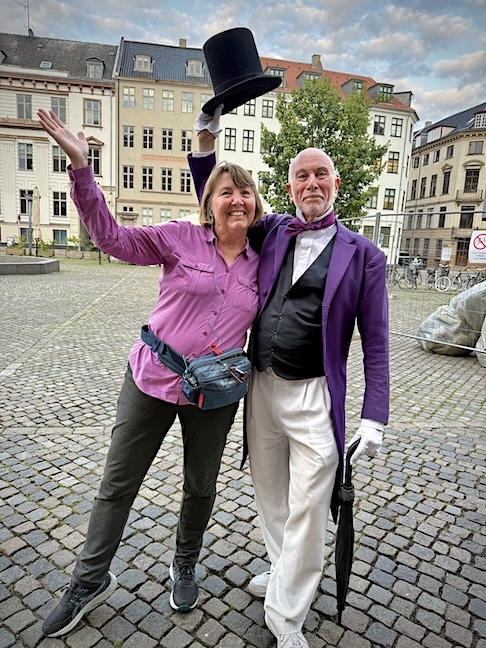
During our walking tour with Heidi on the way to a group dinner, we were accosted by an actor in full regalia portraying Hans Christian Anderson. We thought Hans was a random busker, but he was a surprise part of our tour. Hans’ tales about his life and times from birth in 1805 to his demise in 1875 were interesting and enlightening. Famous for his fairy tales, the Danish author also wrote plays, travelogues, novels, and poems.

After dinner, we joined a horde of Scottish soccer fans precelebrating in the bustling Amagertory Square in preparation for the Scotland vs Denmark World Cup playoff. Their reckless enthusiasm was infectious, and we were welcomed into the clans with open arms. The game ended Denmark 0-0 Scotland the next day.
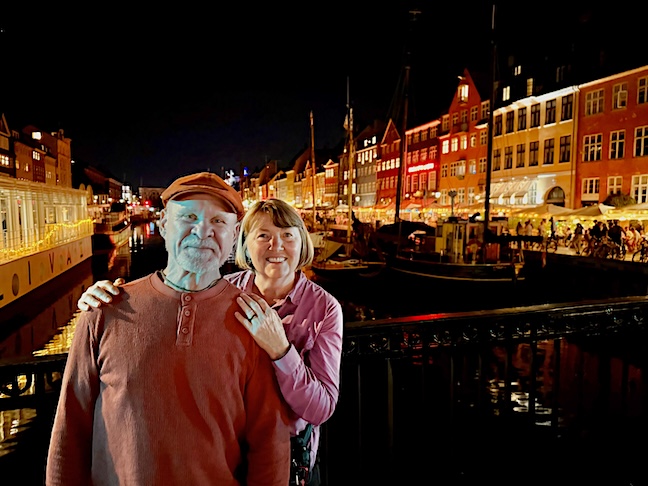
Our Day 1 in Copenhagen wound down with a stroll along the festively lit Nyhavn Canal. We felt welcome and safe in this thriving part of the city and were strategically located for walking to many of the historic attractions that awaited.