
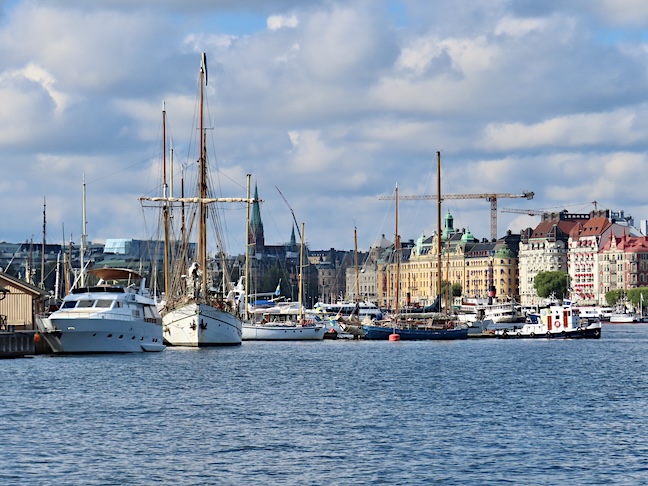
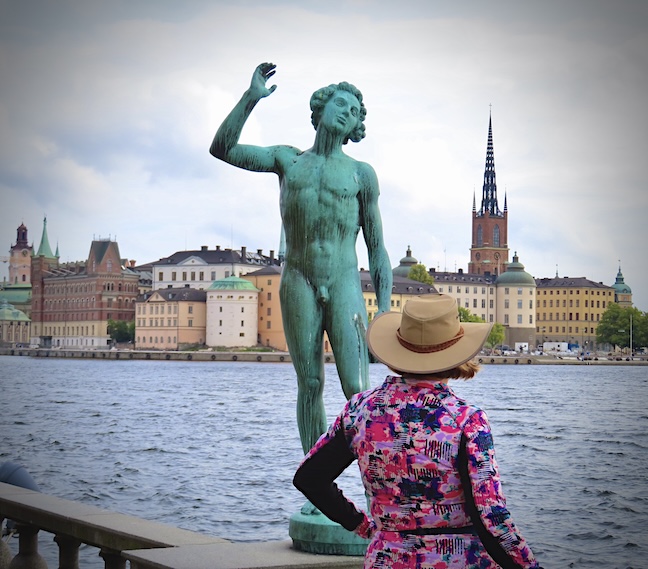
In the 1950s, Stockholm’s city planners decided art should be part of everyday life and works of art are prevalent throughout the city. The Scandinavian people are much less squeamish about the human body than priggish Americans.
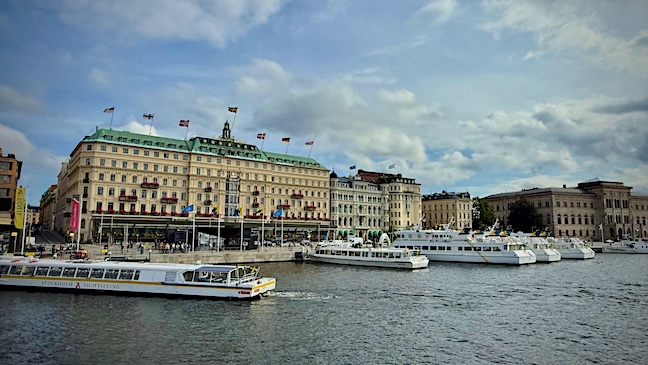
Stockholm guards the entrance to Lake Mälaren from the Baltic Sea. The strategic location allowed Stockholm to quickly grow from a medieval town into the modern center for trade, politics, religion, and royal power.
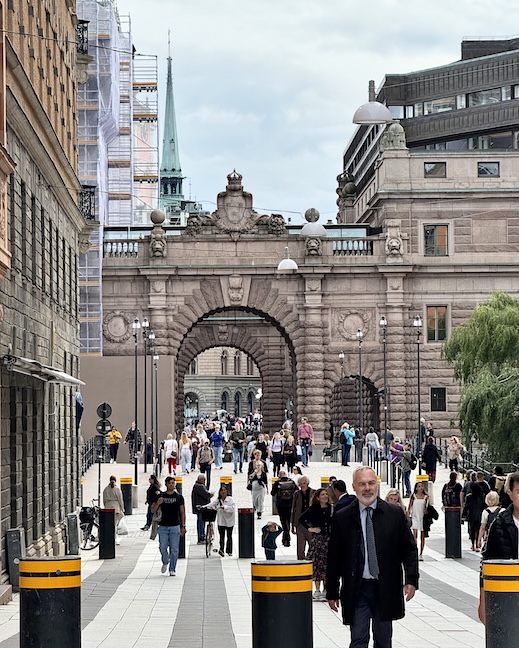
Despite Stockholm’s large population, the city doesn’t feel crowded. Pedestrian walkways help ease the way for a population that prefers walking or biking when possible.
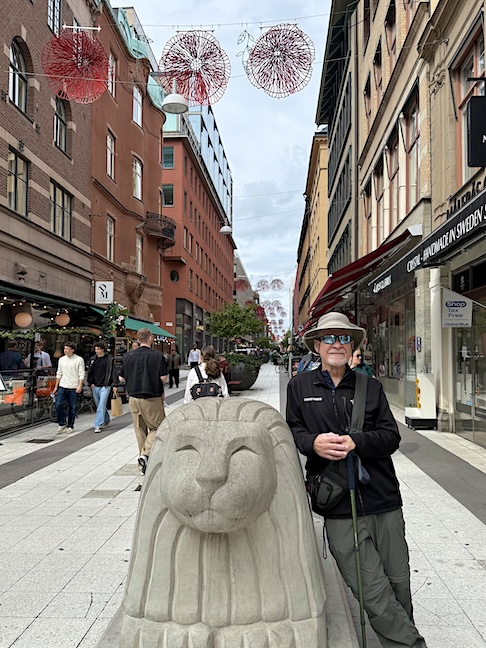
Large shopping areas get the pedestrian treatment too, and not just for tourists, as we found locals shopping alongside us. Excellent public transportation, utilizing buses, boats, ferries, the subway, commuter trains, and trams, helps keep traffic manageable.
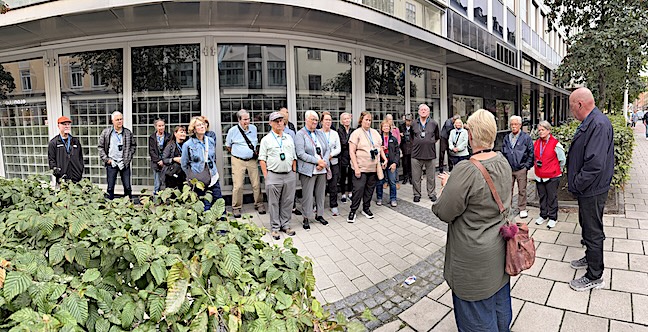
On September 2, 2025, we joined our tour group for introductions and a group dinner. The next morning, we hit the streets with our Rick Steves tour guide, Heidi.
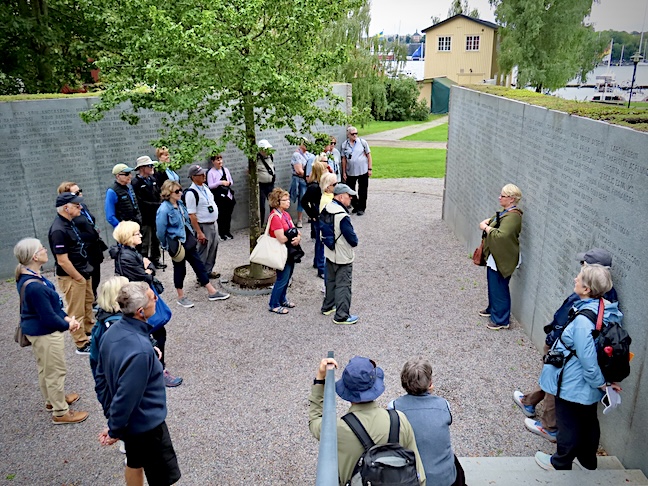
Heidi took us to the Estonia Memorial near the waterfront on Djurgärden Island. On September 28, 1994, the drive-on car ferry MS Estonia sank with 989 people on board in what is considered in the Baltic Sea as “normally bad” conditions of 39-56 mph winds and 13-20 foot waves. Only 183 passengers were rescued, making the sinking the deadliest peacetime sinking of a European ship, after the Titanic. Most of the 852 souls lost were Swedish or Estonian. It is believed that the storm shields protecting the car ramp on the bow were sheared off by massive waves, and the boat took on insurmountable water.
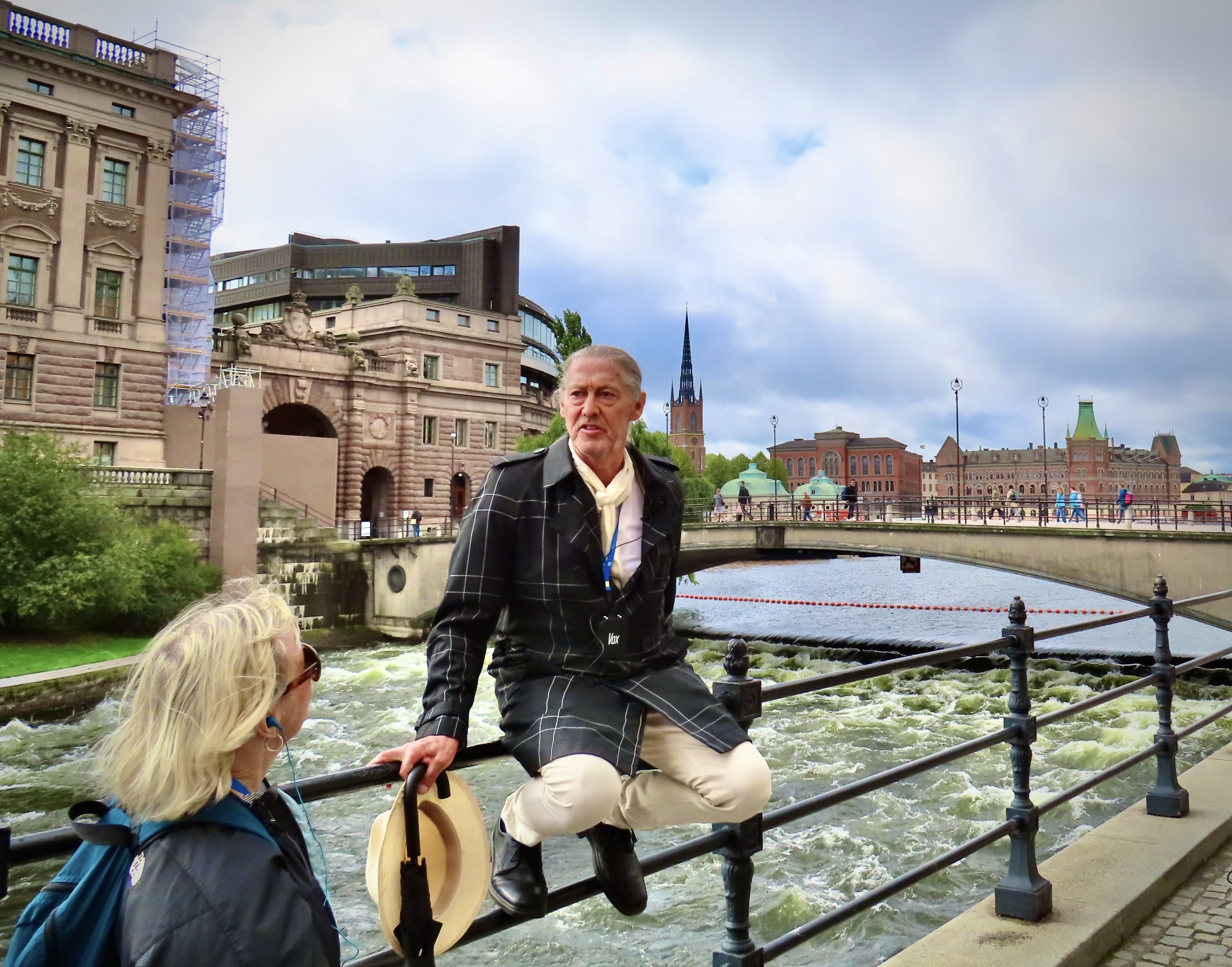
Heidi introduced us to our local guide, Hokum, who was passionate about Stockholm and incredibly knowledgeable about his city, the government, and the Swedish people. Hokum was open and friendly to the point of taking all 28 members of our tour group into his modest home in Gamla Stan to illustrate the Swedish way of life and the much smaller accommodations the Swedes are accustomed to. Hokum was also a splendid showman.
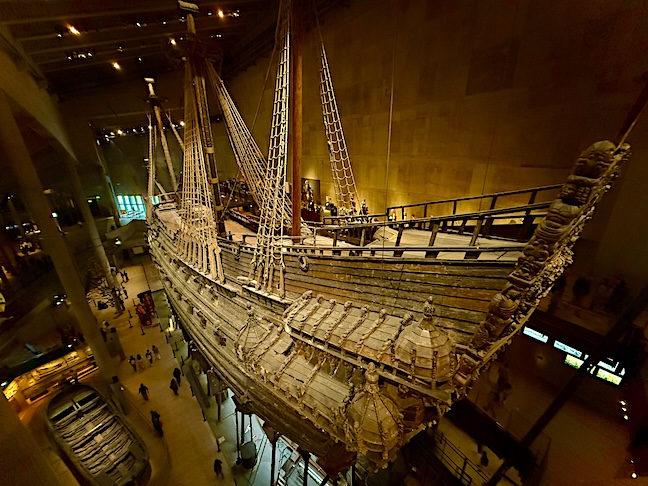
Also on Djurgärden Island, we toured the Vasa Museum. Upon entering, we were dumbstruck by our first eyeful of the 17th-century warship! Vasa is 226 feet long, 38 feet wide, and 172 feet tall from keel to the top of the mainmast. Vasa carried 64 cannons that could shoot 550 pounds of shot in one broadside, which was twice as much as any European warship at the time. Sweden’s Vasa was built to make a statement about its naval prowess.
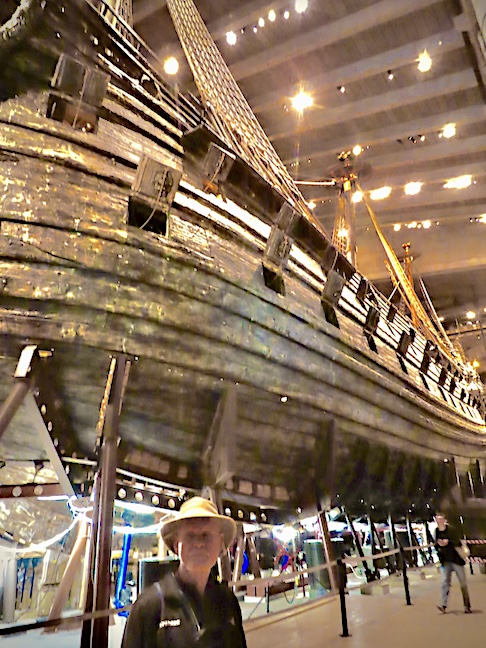
It was August 10, 1628, when Vasa took her maiden voyage with King Gustav II Adolphus, along with a host of dignitaries and thousands of spectators on shore to watch his magnificent achievement sail. On a mostly calm day, a rogue gust blew Vassa on her left side. She righted, but the next gust flattened the majestic ship, water rushed into the gunports that had been opened to fire a salute, and after only 15 minutes into the exhibition, the Vasa sank like a stone in 393 feet of water with 150 people aboard, killing 30 of them.
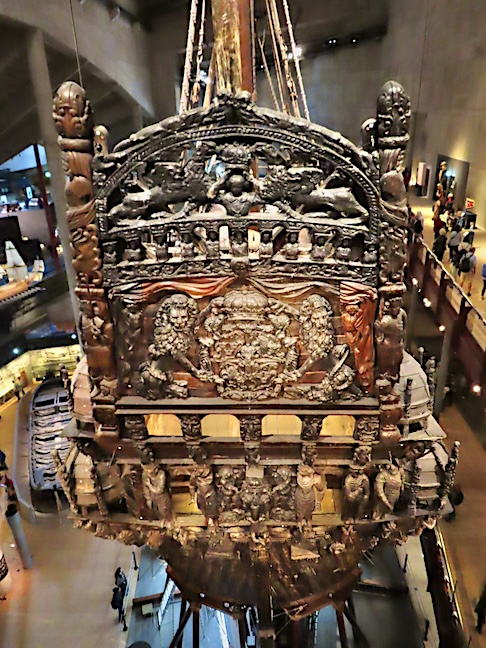
Vasa’s elaborate carvings added to the overweight of 64 bronze cannons, when the ship was designed to carry only 36 cannons. The “feat of engineering” was top-heavy; her keel was too shallow, and her lack of stability was evident. The king’s meddling with design and rush to completion contributed to her doom. Sweden raised the Vasa in 1961 and found 98 percent of the ship’s wood was intact. Vasa’s restoration is ongoing. The Vasa Museum exceeds one million visitors each year.
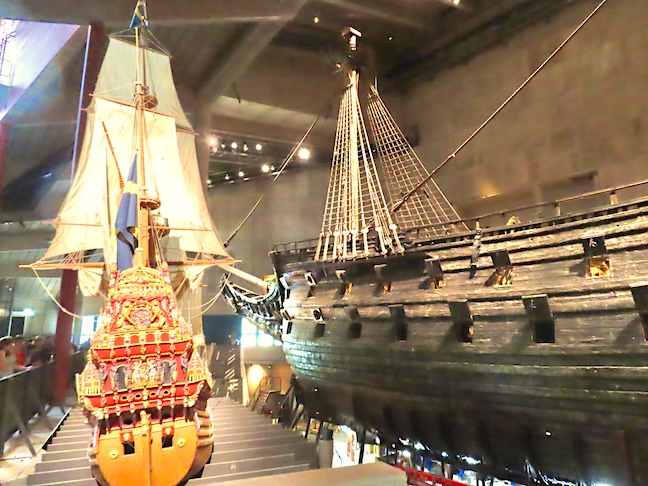
The 1 to 10 scale model of the Vasa depicts how the ship appeared when she was lost in 1628. It took 12,000 hours over five years to complete the replica.
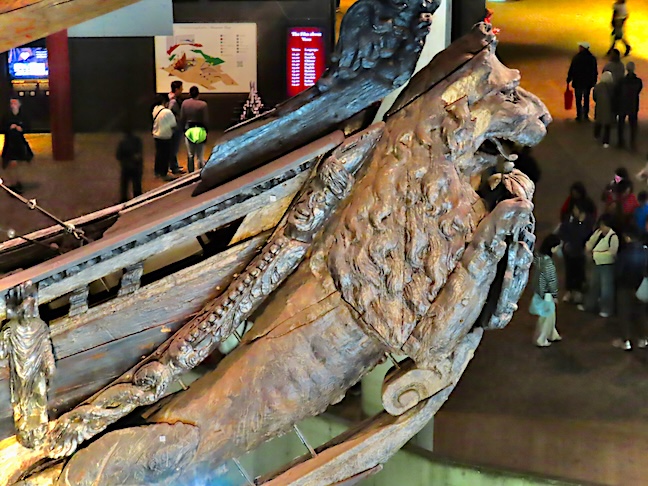
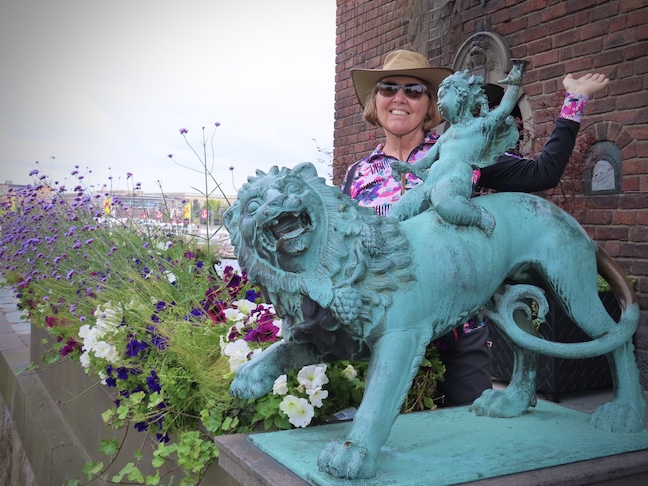
The lion figurehead on Vasa’s bow is a symbol of Swedish heraldry, depicting strength, power, and courage. The lion is part of the Swedish coat of arms and is prominent on Sweden’s flags, official seals, and emblems. We found lion statues throughout Stockholm representing national pride and identity.
Thursday, September 4, we will visit Stockholm’s elaborate City Hall and then say farewell to “The Venice of the North.” A 4-hour train ride will take us to Molmo, where we’ll catch our deluxe tour bus to Copenhagen. Farväl!