
We drove the backroads between Parks to take in some of the lesser-known sights, and often happened upon cool features we hadn’t planned on or didn’t know existed. Utah, Arizona, and Nevada rewarded us constantly.
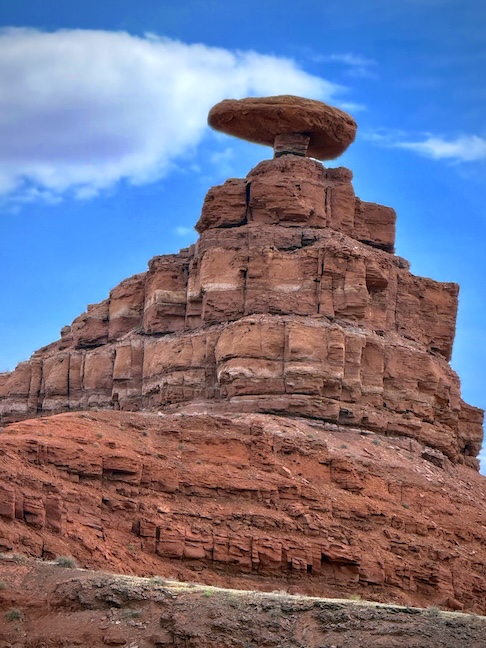
A balance stone is perched on top of a 300-foot-high talus stone, making up this 280-million-year-old formation shaped like a Mexican sombrero near US 163 above the west bank of the San Juan River.
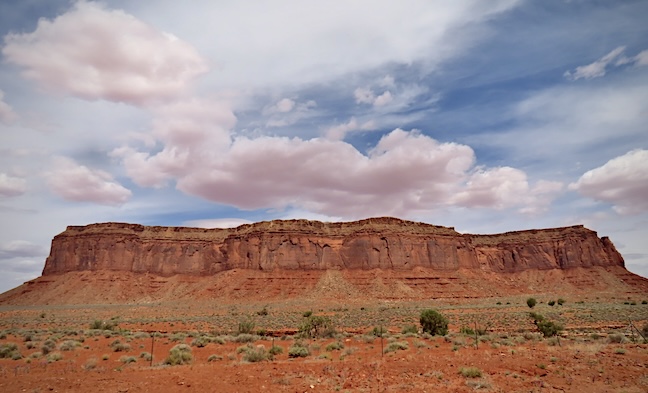
I’ve never seen the clouds so red from reflecting the scarlet desert below. I now understand the American Indian name, Red Cloud.
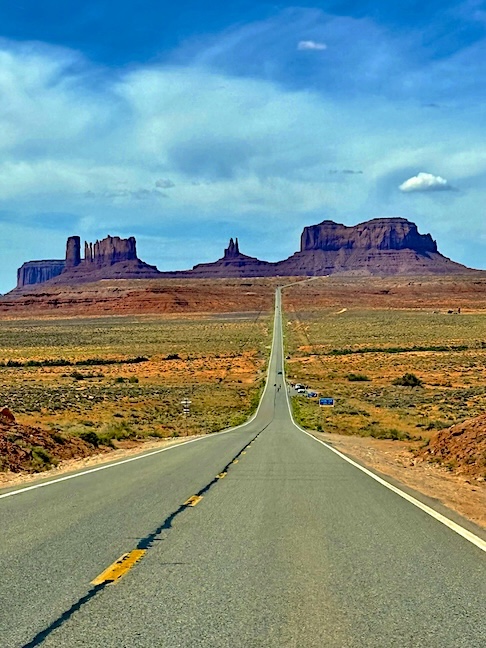
We topped the hill, going 65 mph in the middle of the desert near Monument Valley on US 163, and found people milling about in the road taking pictures dead ahead. This is the spot where Forest Gump stopped running in the movie, aptly named Forest Gump Point.
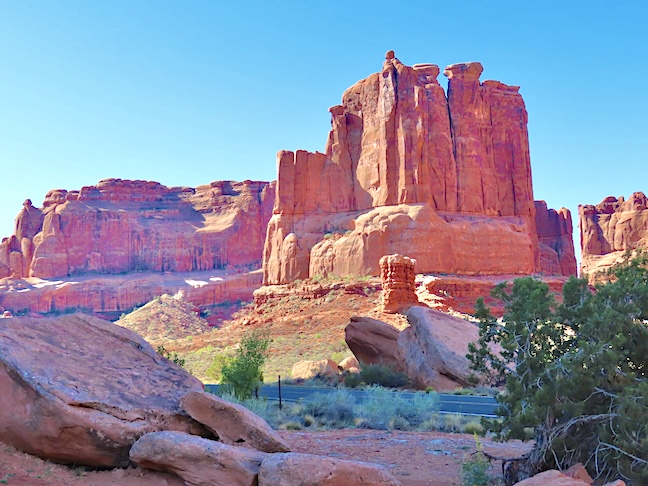
The drive into Arches National Park is as stunning as the arches. The above formation is called Park Avenue. The individual spires look like New York skyscrapers, especially up close, while looking up.
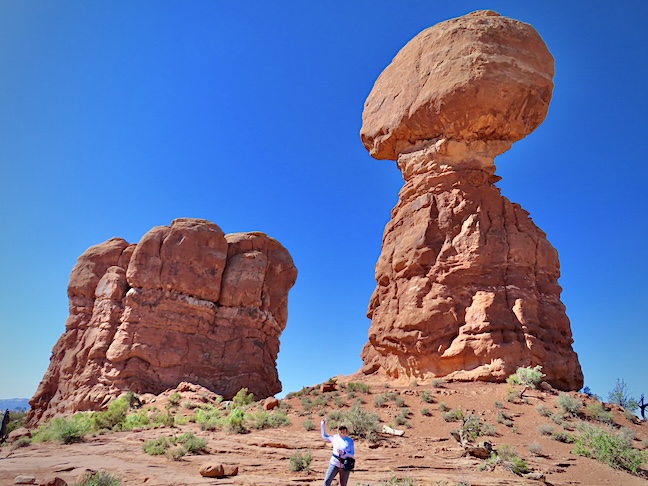
Like many of Arches National Park’s main features, 128-foot-tall Balanced Rock can be viewed from the main road, but the grandeur of all the unbelievable formations can only be fully appreciated when you hike out to them. The estimated weight of the balanced rock is 3,577 tons.
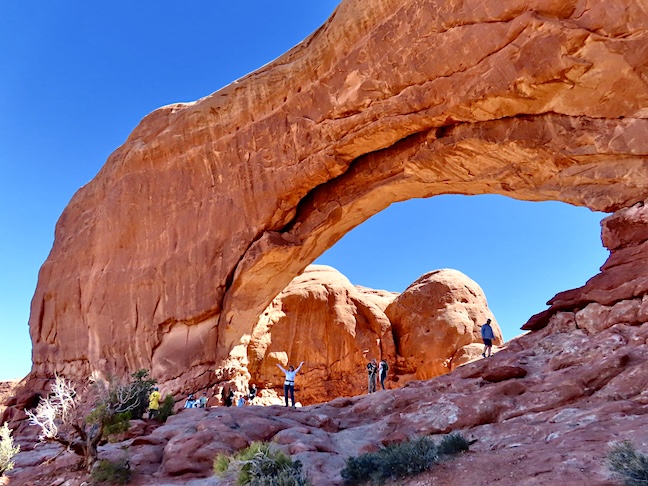
The North Windows Arch is part of a 1.2-mile loop trail that includes 2 more natural spans. At 51-feet high and 93-feet wide, it provides a perfect frame for panoramic pictures.
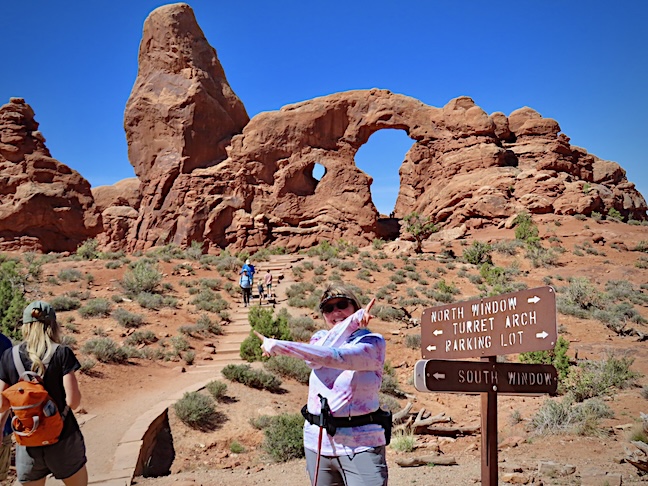
The trails for these arches were easy walking. Arches Park stresses early arrivals and obtaining an entry time online before getting to the main gate. A great many people heed the early arrival time, so you’ll still have lots of company in the morning, but the jam-up waiting to enter makes any kind of reserved entry time impossible to enforce. We had no reservation and were not asked for one.
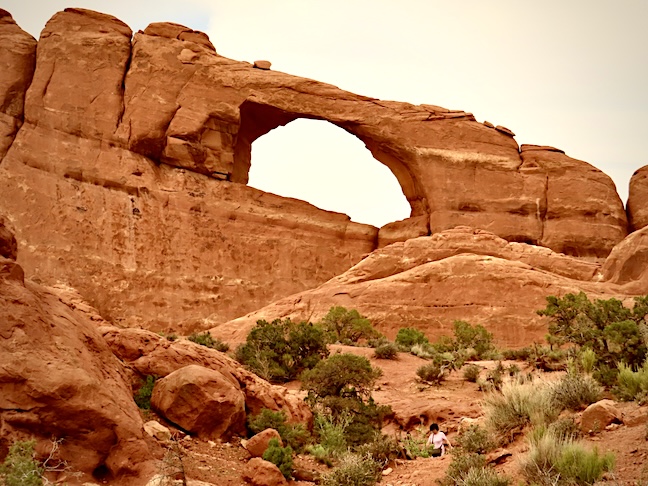
Skyline arch is 33 feet high and 77 feet wide. It’s an easy .4-mile hike to the base. A massive boulder fell from within the arch in 1940 dramatically increasing its size and leaving rubble at the base.
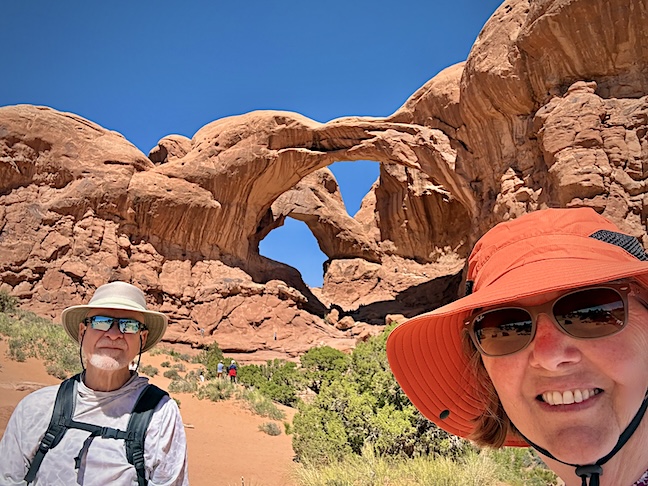
Double Arch is 144 feet long and 112 feet high. The unique pair of adjoining spans was featured in the opening scene of “Indiana Jones and the Last Crusade.”
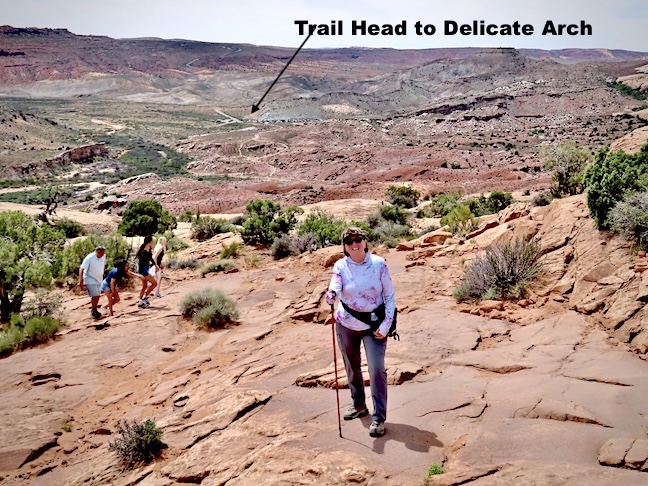
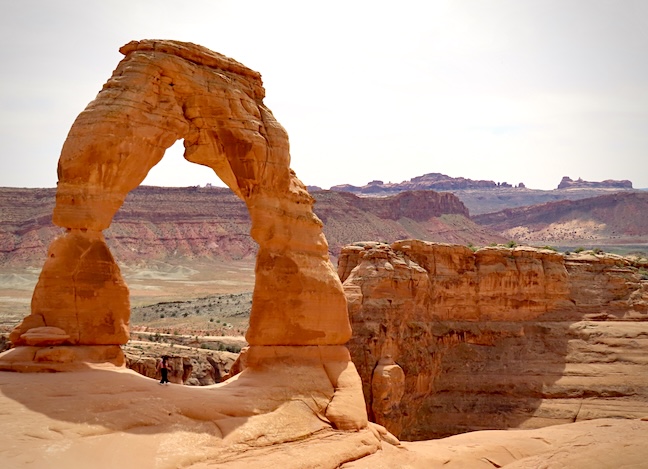
The 3-mile round-trip trek to Delicate Arch offered zero shade from the sun’s relentless heat, steep sections of sand-slick rock face, treacherous footing, and narrow paths along cliff faces with sheer drops on the outside and no guard rails, yet it is the most popular hike in the park. It is strongly advised to carry 2-3 quarts of water and wear sturdy shoes for this trudge, but many had no water and wore flip-flops, slides, crocs, and mules, all with zero support and dubious traction. We passed people panting, sweating, crying, cursing, collapsing, and limping up the trail, and saw nobody turning back.
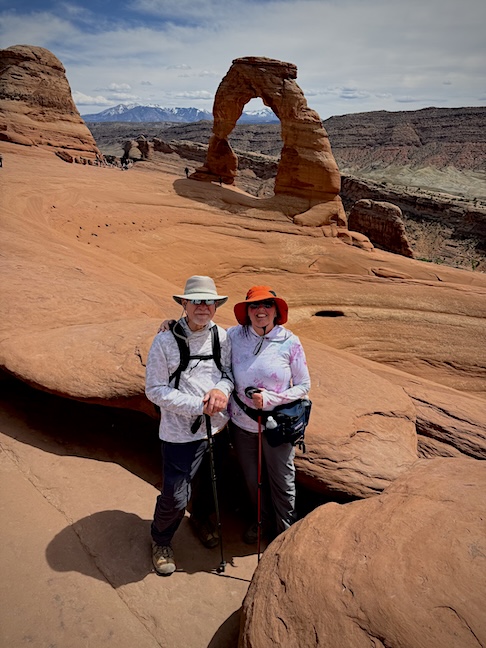
Making it to the iconic Arch is a brag-worthy feat!
I
With its ominous cracks on top and perouisly eroded support leg, it’s a miracle that Delicate Arch is still standing. Delicate Arch is the world’s most recognized natural span, graces Utah’s license plates, and was included in the 2002 Olympic torch relay. It’s little wonder people are desperate to see it before it falls.
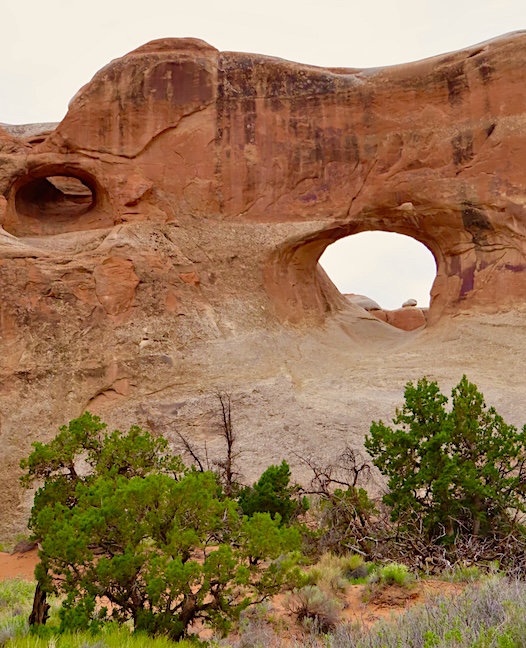
After the Delicate Arch hike, we were dragging, but the Devil’s Garden trail at the end of the main road lured us into one last walk in the sand with the promise of more cool arches like Wall Arch.
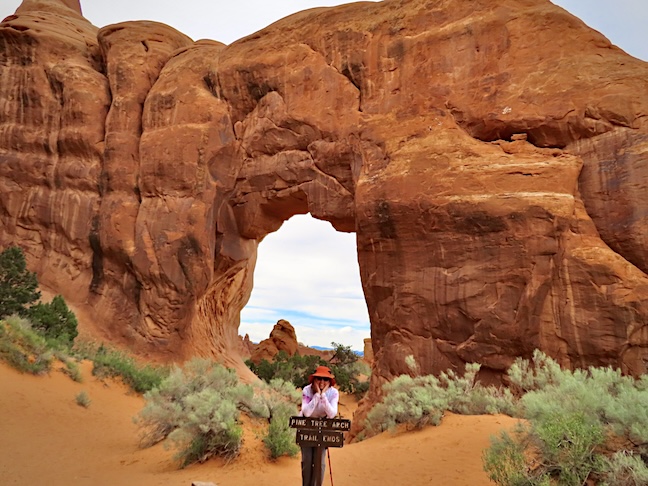
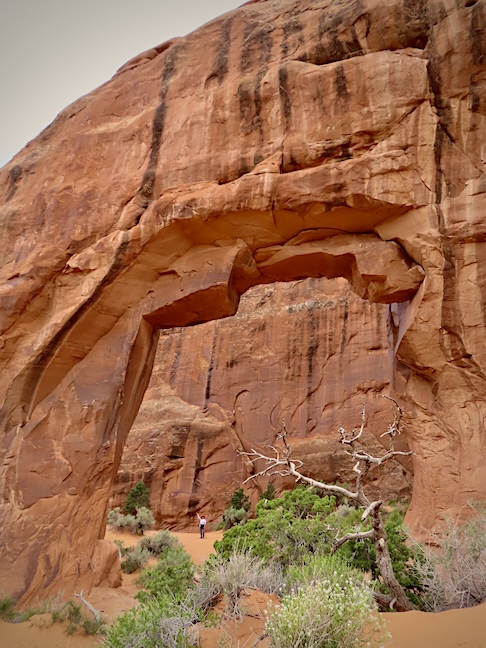
The deep-sand path and shelter from any breeze make the trail to Pine Tree Arch a scorcher during the hot summer months. It’s still worth every labored step to see. We were astonished by how different and beautiful the infinite rock formations were on the 18-mile drive back to leave Arches National Park. We spent the night in Moab and headed for the North Rim of the Grand Canyon the next day.