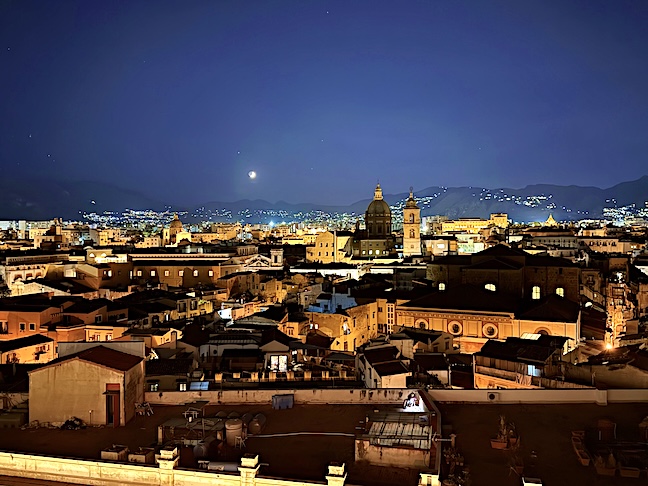
At 9,927 square miles, Sicily is the largest island in the Mediterranean. Hills and mountains cover 85% of the island’s terrain. With a population of 5.8 million, Sicily is one of Italy’s most populous regions.
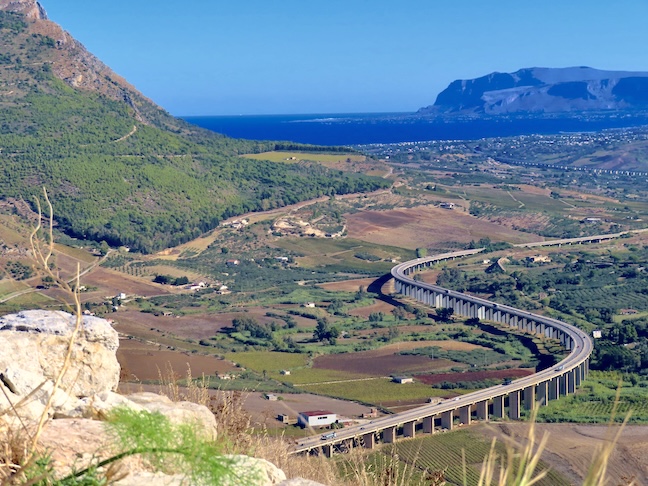
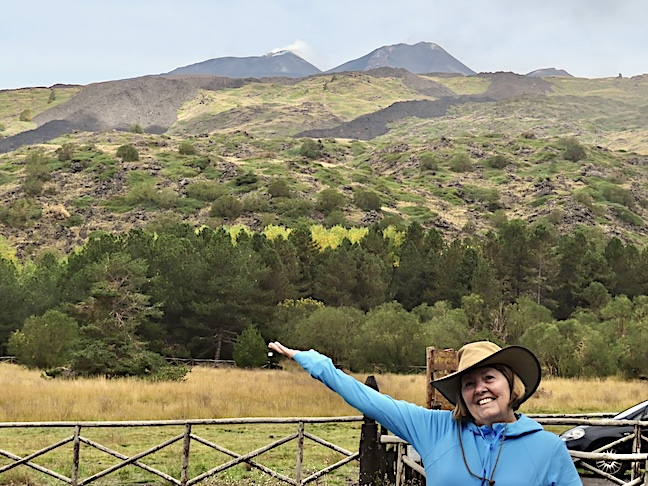
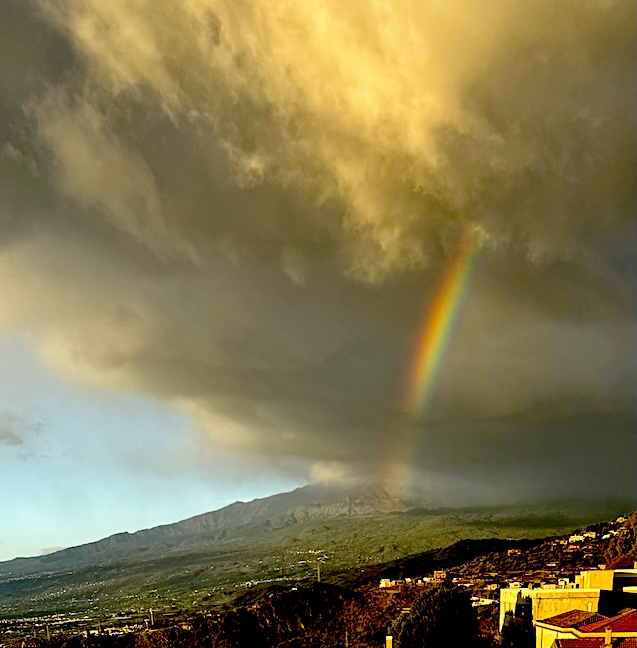
Sicily has four active volcanoes, including Mt. Etna, which stands at 10,900 feet and is Europe’s largest and one of the world’s most active volcanoes.
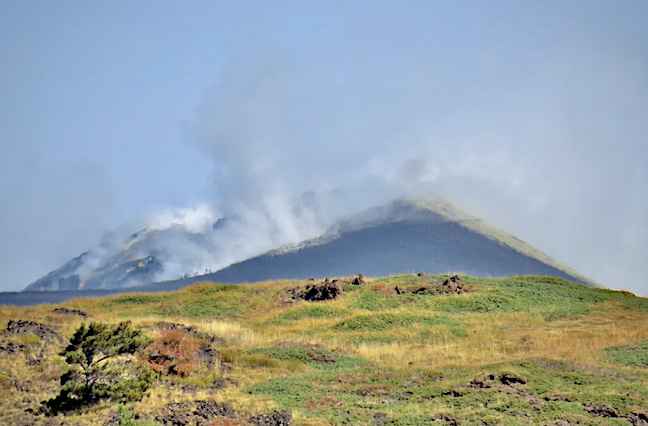
Mt. Etna erupts multiple times each year, including 11 eruptions in three weeks during 2021. Documentation of Mt. Etna’s eruptions can be traced back to 1500 BC.
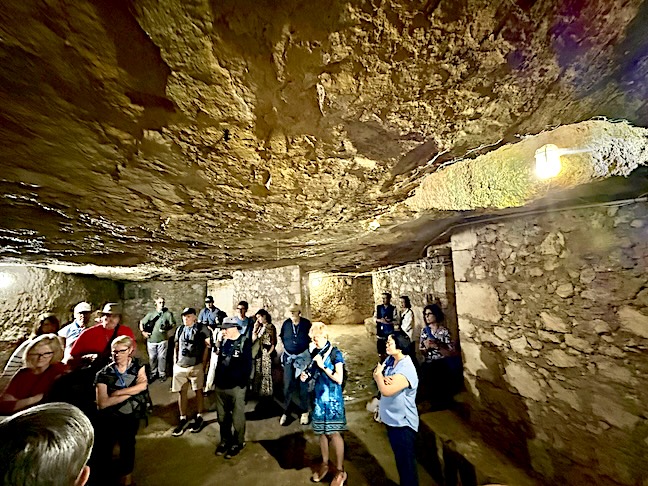
Sicily’s first conquerors of note were the Greeks in the 8th century BC, followed by the Romans in the 3rd century BC, Byzantines in the 5th century AD, Arabs in the 9th century AD, Normans in the 11th century AD, and the Spanish in the 15th century AD. Sicily returned to Italy in 1861, during the unification. The Nazi occupation of Sicily in WWII was ended by the Allies’ Operation Husky on July 10, 1943. We were in a bomb shelter under a church when one of the Americans in our group asked our local guide if the tunnels were deep enough to be safe from the Germans’ bombs. Her reply: “Signuri, they were your bombs.”
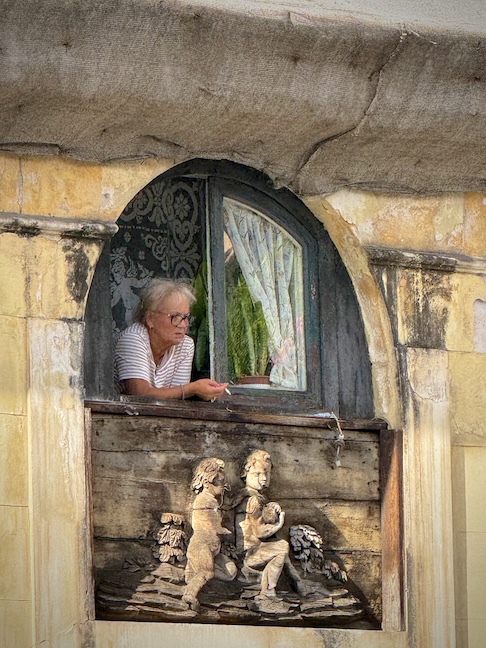
Sicilians are known for their hospitality, warmth, passion, and rigid family values. 2,500 years of invasions have infused them with a broad smorgasbord of traditions, customs, and physical traits. They speak their own language and Italian. Sicilians maintain their survivors’ pride and resilience.
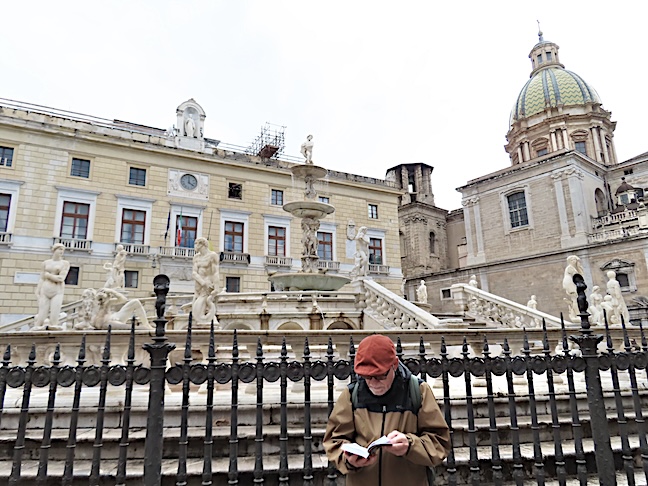
Karen and I would be joining a Rick Steves’ 12-day tour of Sicily on Oct. 13. We arrived in Palermo on Oct. 9 after 33 hours of traveling. We like to unwind and ease into a new country on our own before the fast-paced tour with a new group starts.
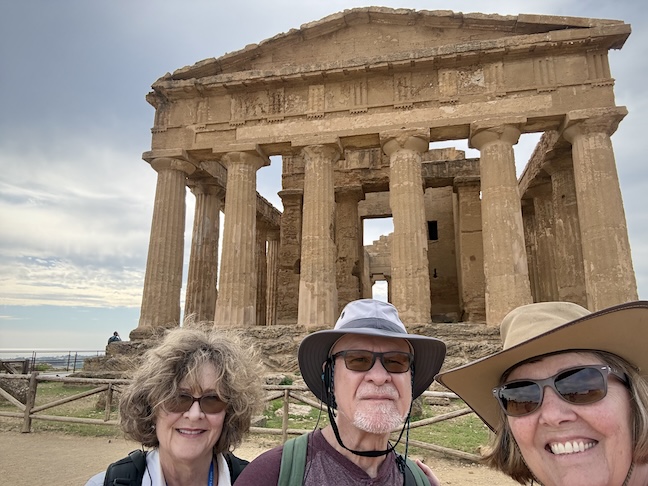
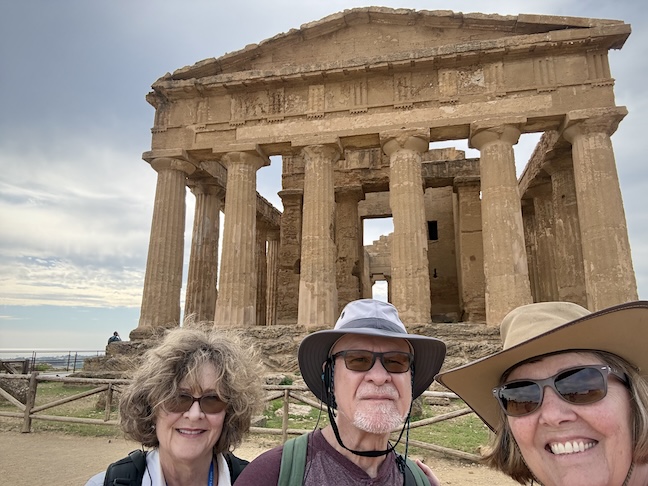
Karen’s friend for over 50 years, Nan, joined us this year. Karen had not seen Nan for 12 years and quickly made up for lost time. The three of us are posing in front of the Concordia Temple in Agrigento’s Valley of the Temples.
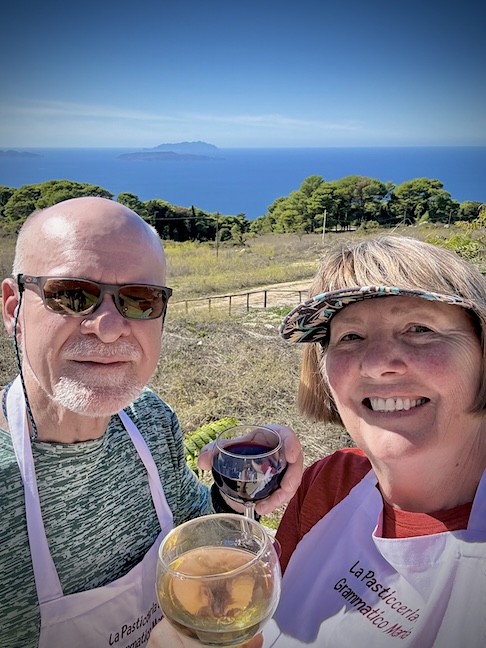
Near Erice we enjoyed lunch at a winery and took a walk into the vineyard. Sicily’s sun-soaked magic and super-fertile land, packed with volcanic nutrients and minerals, turn every bite of food and sip of wine into a unique pleasure. We aproned up and helped with pastry making before eating the sweet treats after our meal.
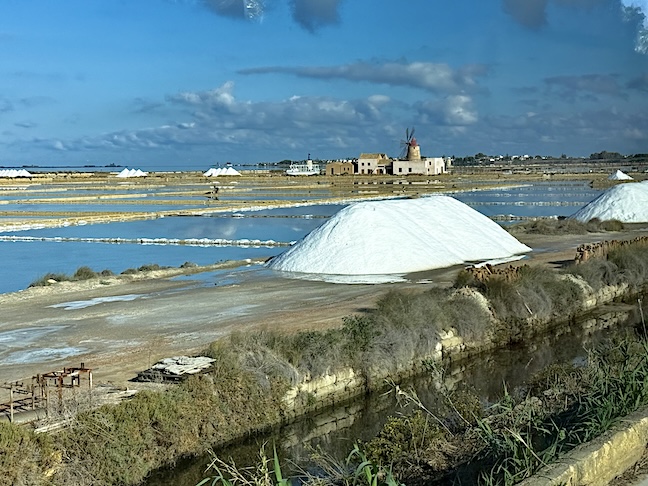
In Trapani, we took a flat-bottom boat ride across the narrow salt flats to the Phoenician island of Mozia to learn how salt has been hand-harvested for 3,000 years. Windmills were used to move water among the various drying ponds.
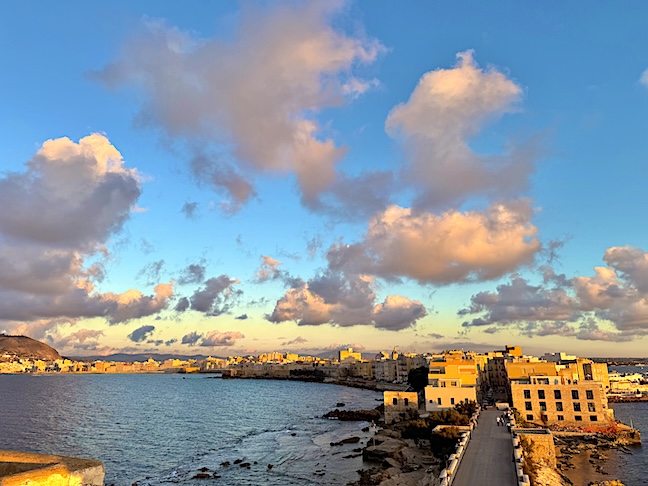
Sicily is strategic for naval superiority and trade in the Mediterranean. The island is 87 miles from Tunisia and 99 miles from the closest point on the African continent. The final jump to mainland Italy is roughly 2 miles. Trapani, or “City of Salt,” has a great harbor and is closer to Tunisia than Rome.
The magnificent Cathedral of Syracuse and Plaza del Duomo add to the mishmash of Greek, Roman, medieval, and Baroque influences on Syracuse’s cityscape.
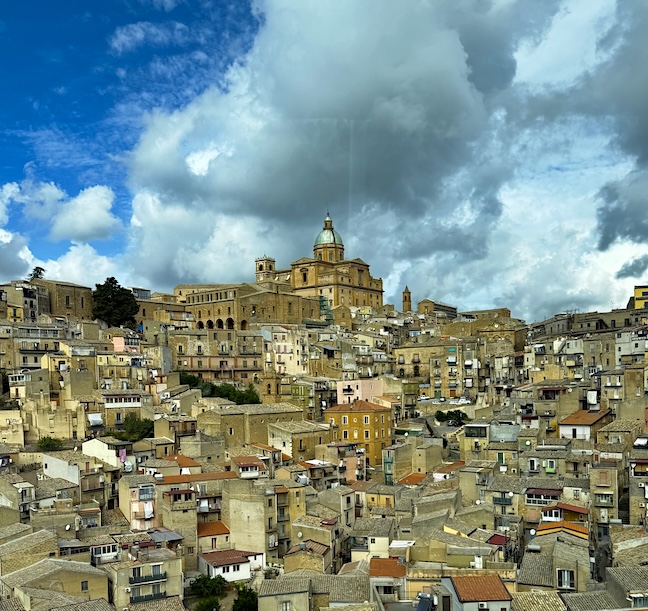
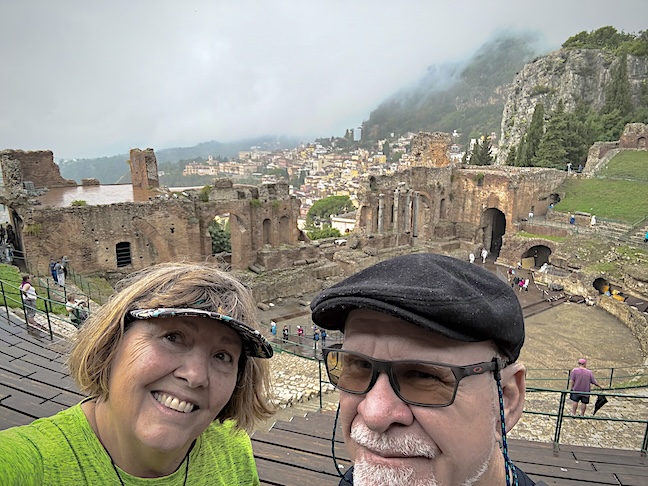
Taormina’s stunning views of the Ionian Sea and its 2nd-century BC Greek theater made it a magnet for artists and writers like D.H. Lawrence and Truman Capote.
Taormina’s breathtaking views, like this rare shot of a rainbow pouring into Mt. Etna, attracted HBO to feature the city in “The White Lotus” series.
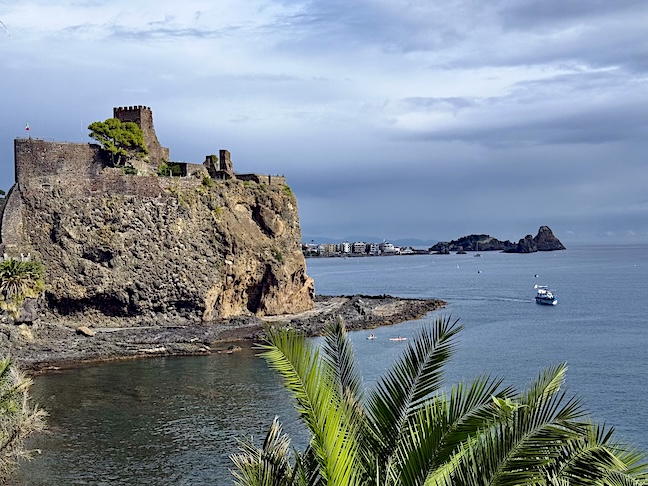
We stayed in Catania a few days after our tour ended and used the Hop-on, Hop-off bus to explore nearby fishing villages along the coast. The town of Aci Castello grew around its Norman castle, built in 1076. The castle is perched on 500,000-year-old ribbon lava and costs 2 euros for seniors to tour.
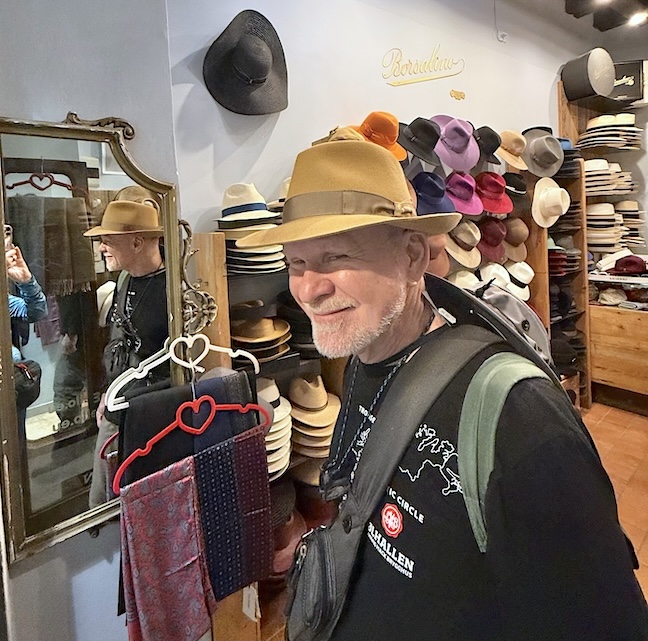
I could not end this brief overview of our marvelous Sicilian adventure without boasting about my souvenir. The Italian milliner Giuseppe Borsalino perfected the Fedora in 1857. I splurged on the famous Borsalino hat and joined the ranks of Tom Landry, Indiana Jones, Frank Sinatra, Freddy Krueger, Humphrey Bogart, and Johnny Depp by wearing it proudly.
Karen and I took a ton of outstanding pictures and I still have much to tell and show you. Stay tuned for more illustrated stories about fascinating Sicily. Salutamu!