
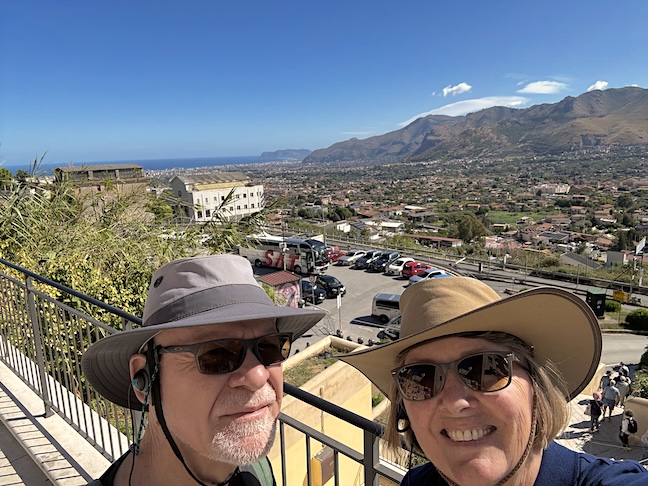
One of Sicily’s most significant sights is the fabulous Monreale Cathedral located on a hilltop six miles southwest of Palermo.
Massive cathedrals like Notre-Dame took 100 years to build in the 1100s, but the Cathedral of Monreale was completed in 15 years under the impatient Norman King William II.
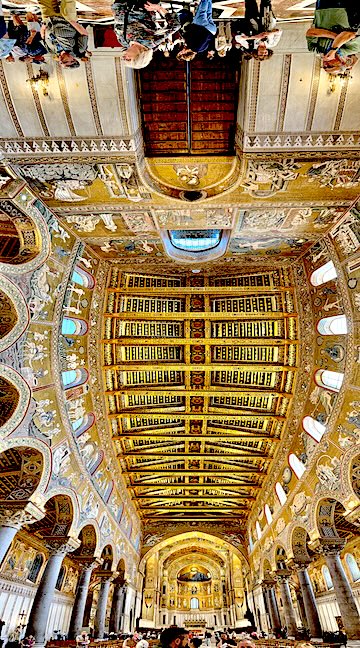
The whopping basilica is 335 feet long by 130 feet wide, overlaid with 68,000 square feet of mosaics incorporating Byzantine, Arab, and Norman artistry.
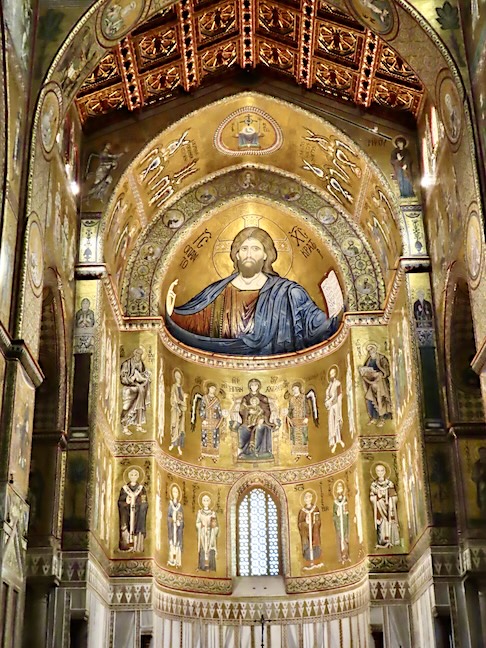
The cathedral’s walls are plastered with about two tons of gold. The mosaics are made by sandwiching a fine sheet of gold between two layers of glass to form tiny tesserae (tiles) that appear to emit rays from the gold backgrounds. This Christ Pantocrator mosaic is about 43 feet high, 23 feet wide, and one of the largest of its kind.
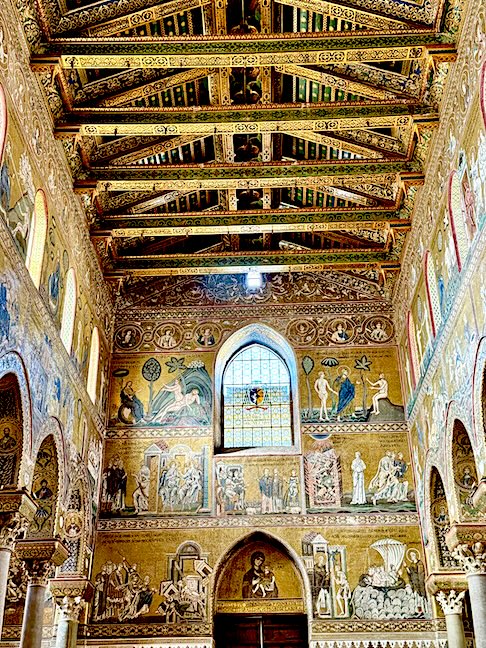
130 mosaics adorn the cathedral walls, depicting Old and New Testament stories. When we entered the cathedral, it was lit only by outside light, dimming the mosaics. Suddenly, the interior lights came on, bringing the glimmering mosaics to life. In minutes, the gloomy darkness returned. The problem stems from a recently installed LED lighting system. The repeated muffled sounds of tourists’ sad “Ohs” when the lights would go out, and the excited “Ahs” when they returned, were hilarious.
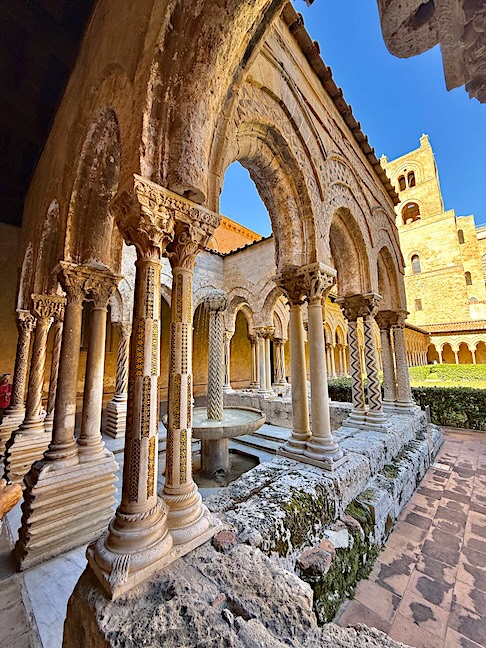
Monreale’s Benedictine monks rarely left the cathedral. They roamed the adjacent cloister, tended produce in its gardens, and contemplated the artwork on the capitals of the 228 unique twin columns.
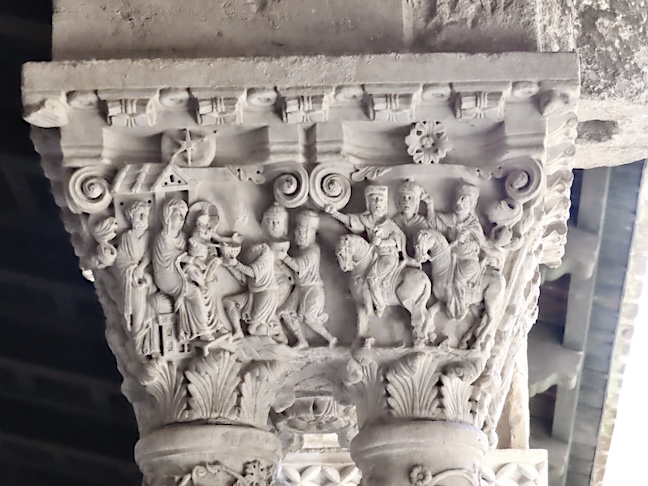
The column capitals’ intricately carved arabesque motifs depict religious scenes with people, animals, plants, and fantasy creatures. No two are alike.
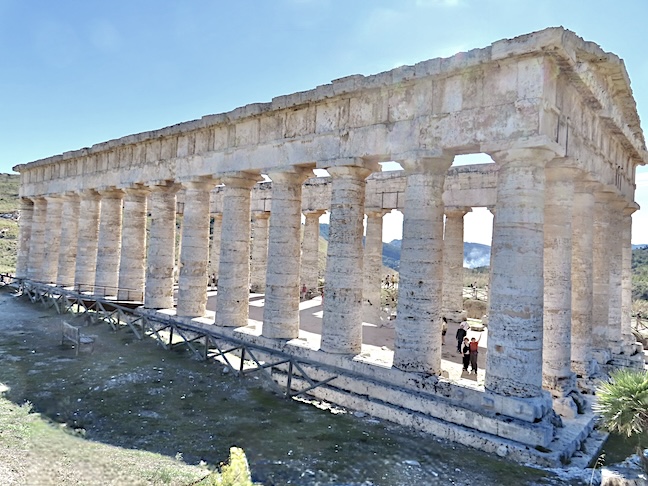
This Doric temple in Segesta is 69 by 183 feet and was considered smallish by Greek standards in 420 BC, when it was built but never finished. Historians guess that it was made to impress the Athenians so they would help defend Segesta against common enemies. Construction ceased once the pact was signed.
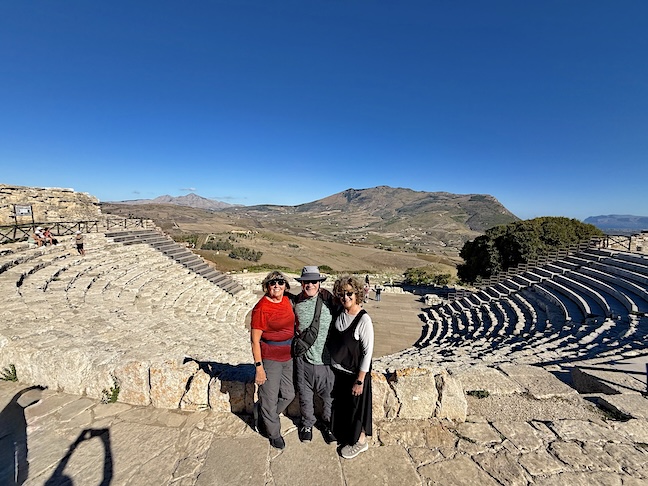
The ticket to the Segesta site includes a bus ride to the top of a hill where a small Greek Theater with excellent acoustics has been partially restored. Actors standing near center stage could be easily heard in every seat.
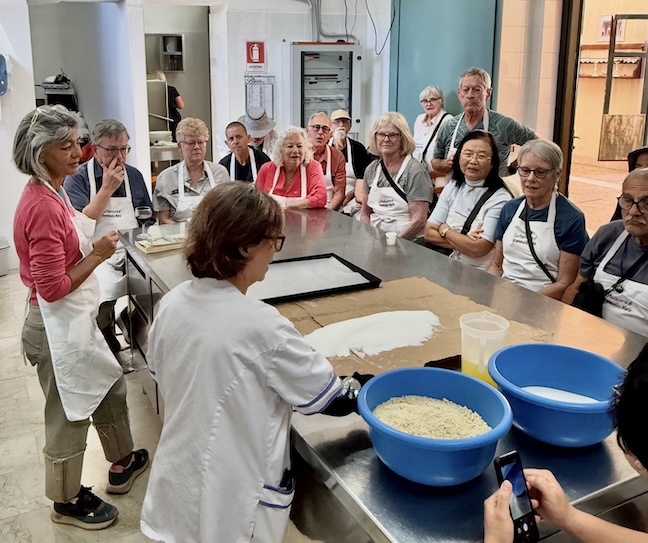
In the mountain-top town of Erice is a traditional pastry shop, La Pasticceria di Grammatico Maria, named for the 11-year-old daughter whose mother sent her to live at the San Carlo Monastery in Erice after her father died and her mother couldn’t feed her six children. Maria learned from the nuns how to make Marzipan from almonds, the base of many Italian pastries. Maria left the convent at 22 with nothing and built, from scratch, the famous bakery where we took pastry-making lessons.
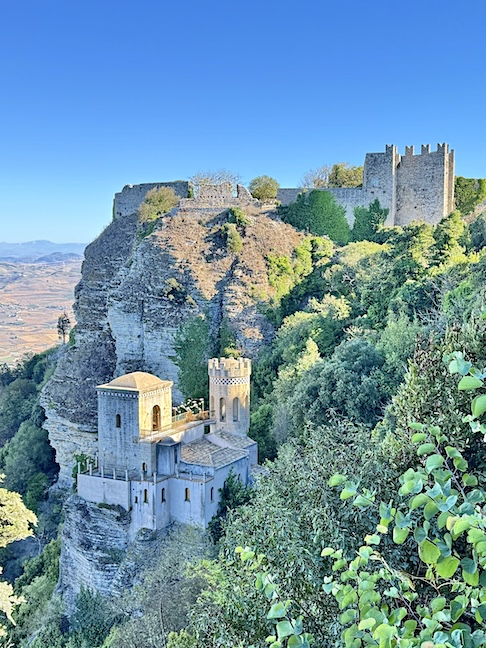
Clinging to the side of Erice’s mountain is the Norman Castle of Venus. Sailors believed that making a sacrifice to the “Goddess of Love” would cause her to send Cupid to shoot an arrow into Neptune, charming him to keep the seas calm. Male sailors paid temple priestesses for “holy prostitution” as homage to Venus to keep them safe, or so they told their wives.
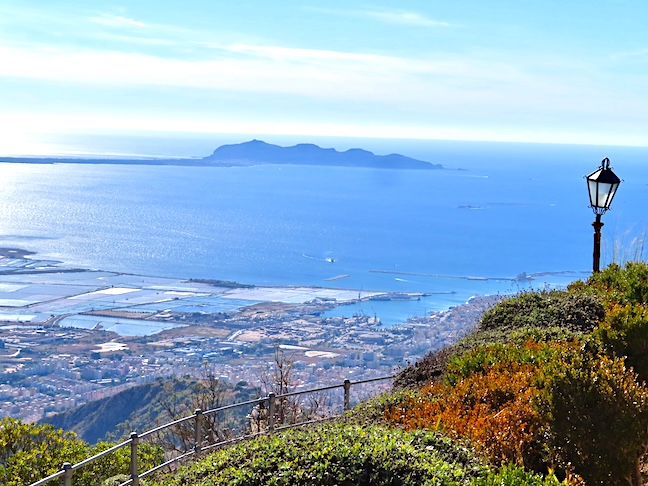
From Erice, we can see the seaside village of Trapani, where we’ll take an orientation walk, explore the city, find a dinner spot, and spend the night.