
In the 1860s, Italy’s nobility lost control when Sicily was reunified with the fledgling country. There was no real law on the island. Crooked clans formed to provide protection and spawned the graft and corruption known as the Mafia, or Cosa Nostra. Mussolini crushed the Sicilian Mafia and some crime bosses fled to America. After the Allied invasion of 1943, chaos reigned. The Allies hurried to dump control on locals and the Mafia clans were handed power and money from the Marshall Plan to rebuild, which they looted.
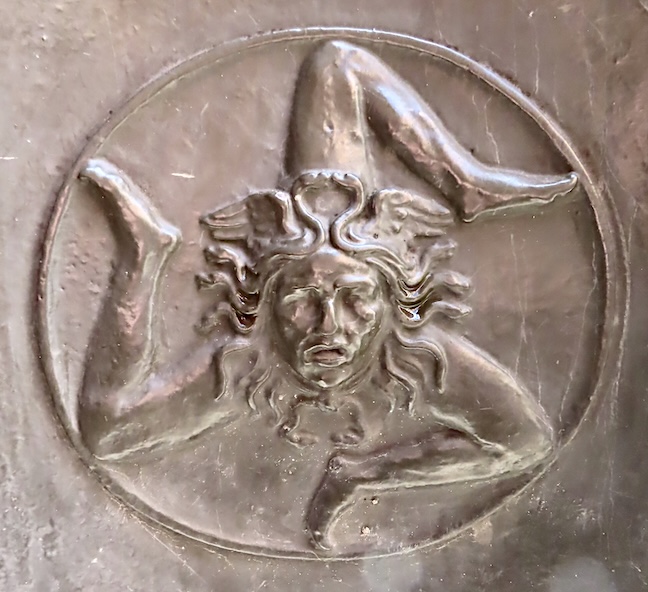
The Trinacria is Sicily’s ancient symbol. Medusa’s head is surrounded by three legs, representing the triangular island’s three promontories. Early colonists hoped it would scare off the superstitious Greeks.
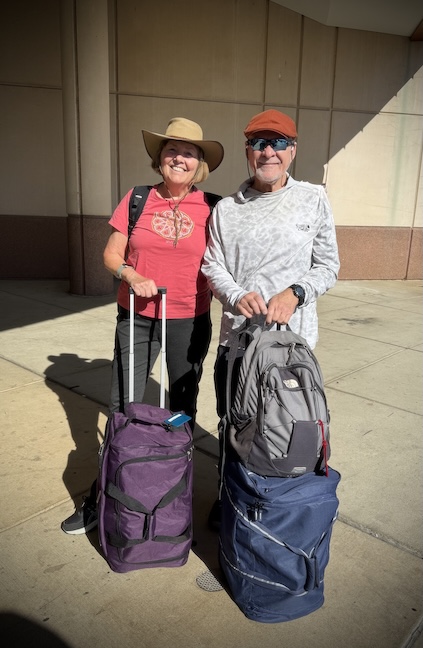
We each carried an overhead roller and a backpack for our 20-day trip. We packed light because we moved around a lot. “If you bring it, you bear it.”
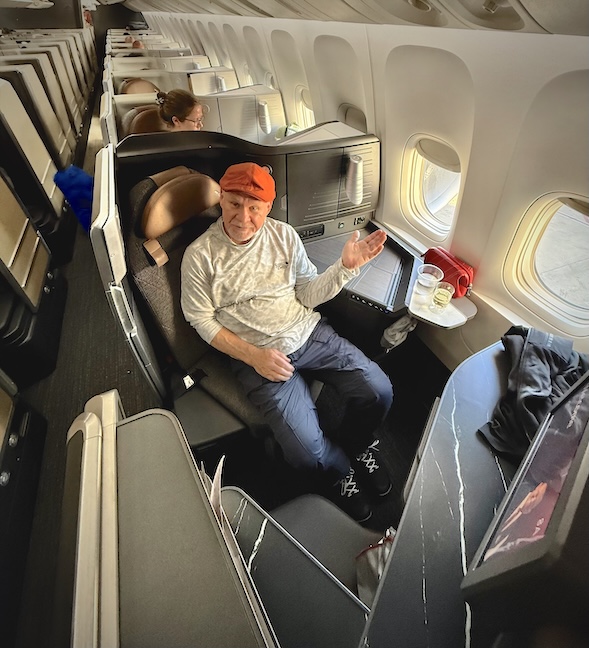
Four airports, layovers, and delays turned this journey into a 32-hour odyssey. Business class on the 9-hour flight from DFW to Heathrow helped soothe our aging bones. I scored two windows in my cubby.
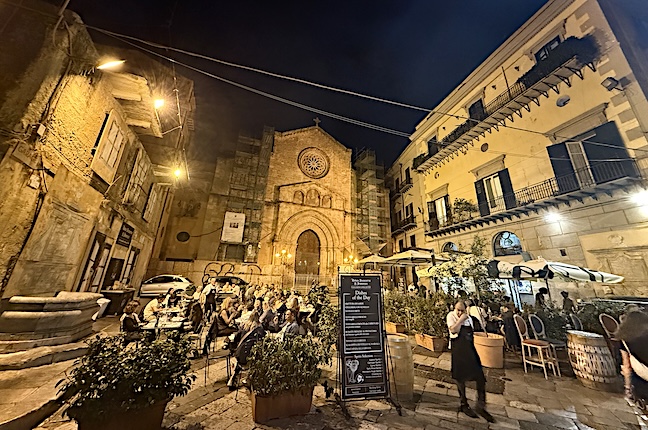
We arrived at our Palermo B&B late at night, after a wild cab ride from the airport, and decided to take a stroll before crashing. Our reward was stumbling upon the peaceful Plazza San Francesco. Aaah!
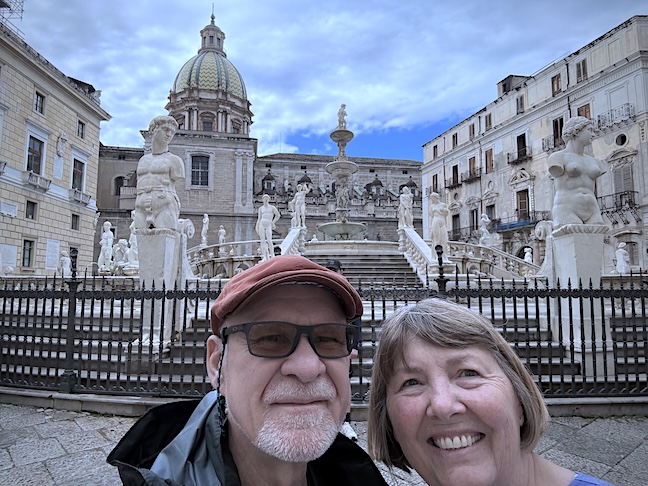
Our self-guided walking tour started at the Fountain of Shame. A Spanish viceroy sold the fountain to Palermo. It was reduced to 640 pieces, shipped from Tuscany, and rebuilt under the windows of a Dominican convent. The nuns deemed the nudity nasty, failed to keep the figures clothed, and resorted to sneaking out at night and chiseling off some of the male figures’ naughty bits.
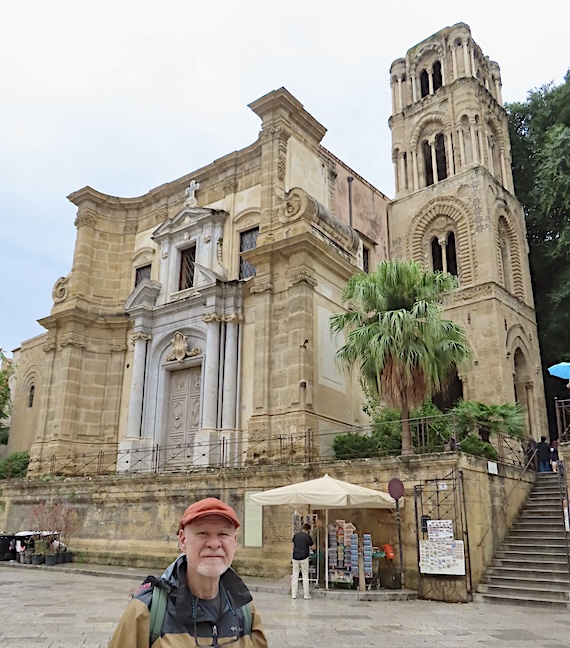
The Church of La Martorana is an excellent example of Sicily’s mishmash of cultures, combining Baroque with Byzantine-Norman flair.
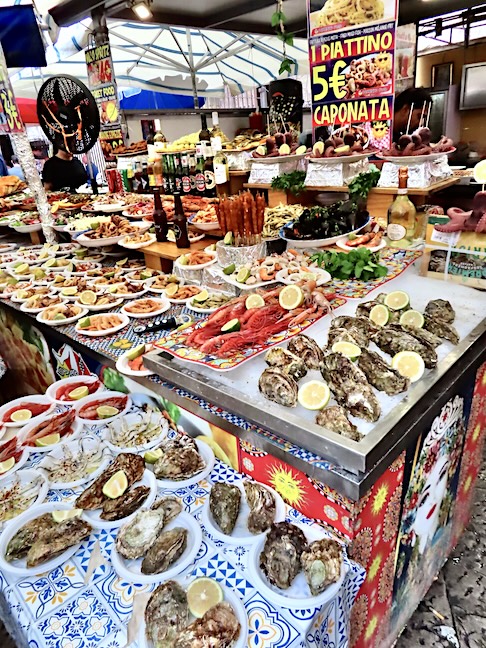
The Ballaro Market is a real-deal Palermo fish market, with singing and shouting vendors crammed into a dilapidated neighborhood populated by immigrant families. The market began operating in this spot 1,000 years ago and provided us with an incredible fresh-fish lunch.
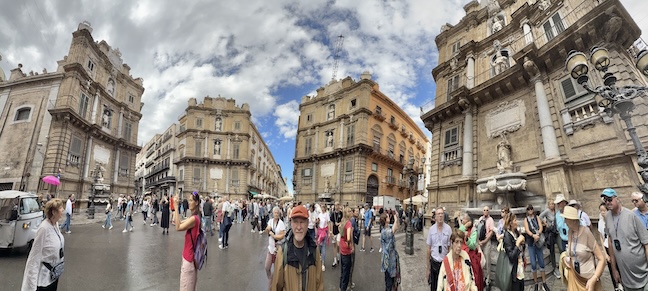
Quattro Canti, meaning four corners, is bounded by four townhouses displaying over-the-top Sicilian Baroque, taking the 1700s ornamental styling to a higher level.
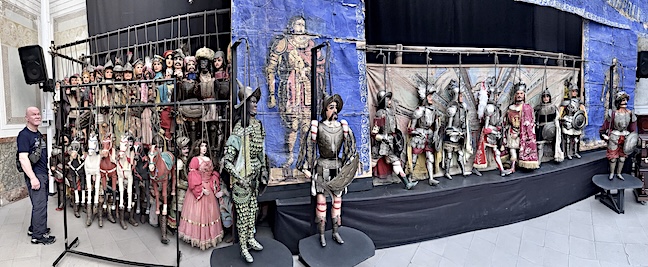
The International Museum of Marionettes was full of handmade puppets from all over the world. Marionettes have strings. The figures controlled by rods are puppets. The artisans who make these are truly talented, but it’s hard to ignore the creepy “Chuckienes.”
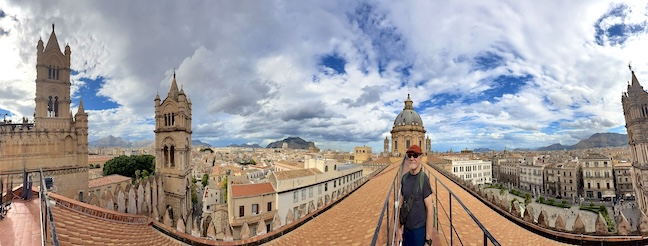
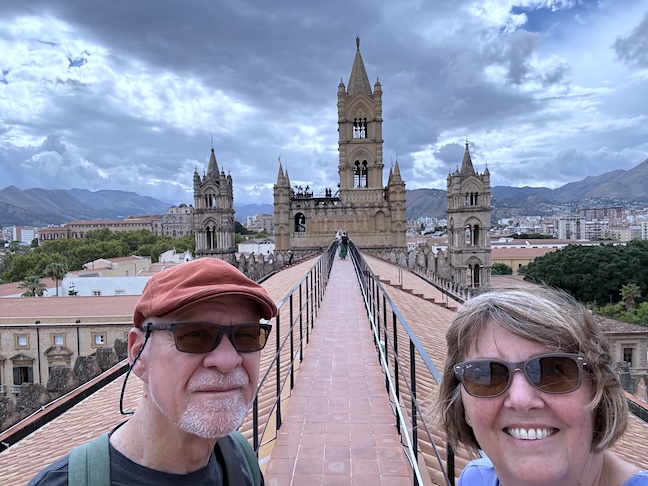
The Arab-Norman-designed Palermo Cathedral was consecrated in 1185. For 6 euros, you can climb the 100 tight steps of a spiral staircase and enjoy amazing views of the city from the cathedral’s roof.
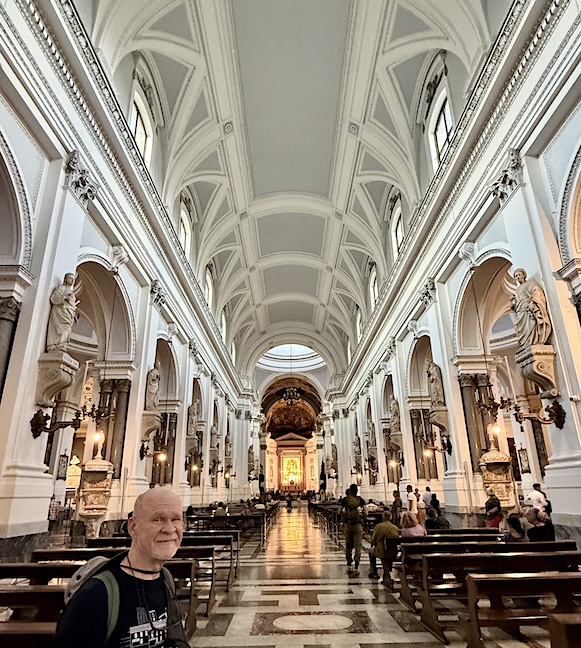
The Cathedral’s interior is elaborate, but the generous seating in the massive nave feels congenial.
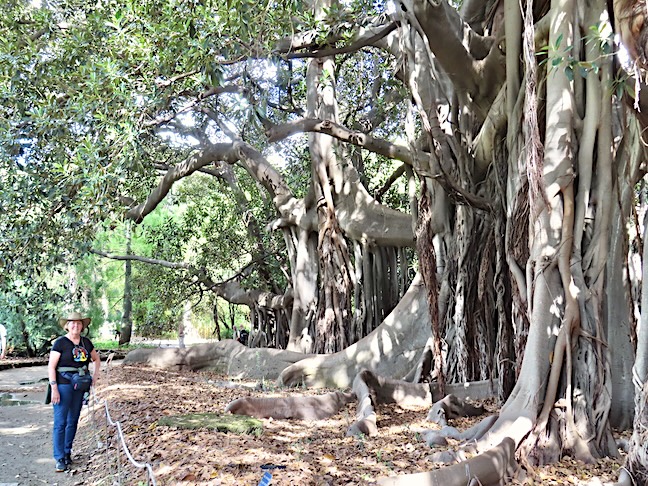
October is not the best time to visit Palermo’s Botanical Garden, which is a research garden for the University of Palermo. My favorite feature was this massive strangler fig tree.
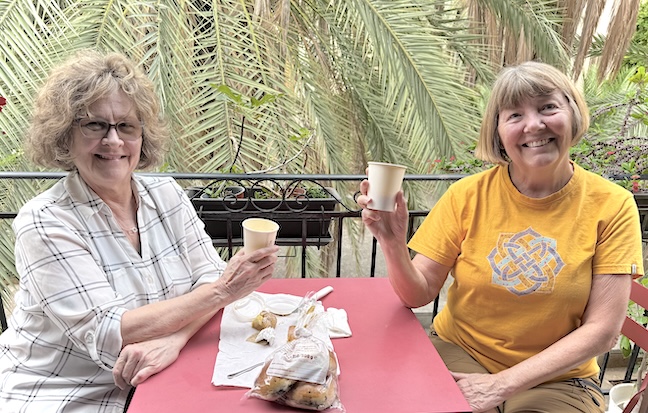
Nan arrived on October 11 and joined us in our two-bedroom, two-bath B&B. Karen and Nan have been friends for over 50 years. The ladies are catching up with fresh pastries and espresso on our balcony.
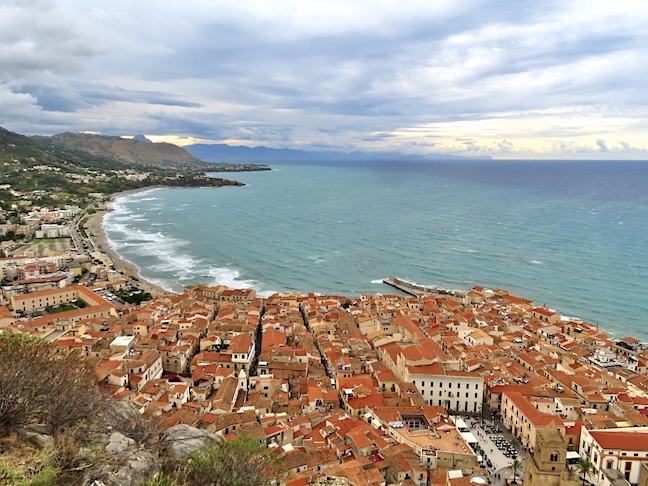
We traveled up the coast for 50 minutes by train to explore Cefalu, which is sandwiched between a massive rock and a soft spot or sandy beach. I hiked up the steep, zigzagging trail of La Rocca alone to visit the box-of-rocks remains of the Temple of Diana and take some breathtaking shots of the city.
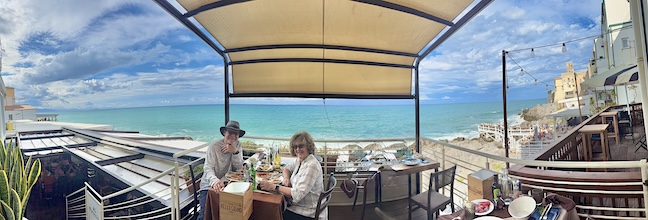
It would be hard to top the Mediterranean view from the terrace where we ate lunch at Al Porticciolo in Cefalu. Their wood-fired oven seafood pizza was excellent.
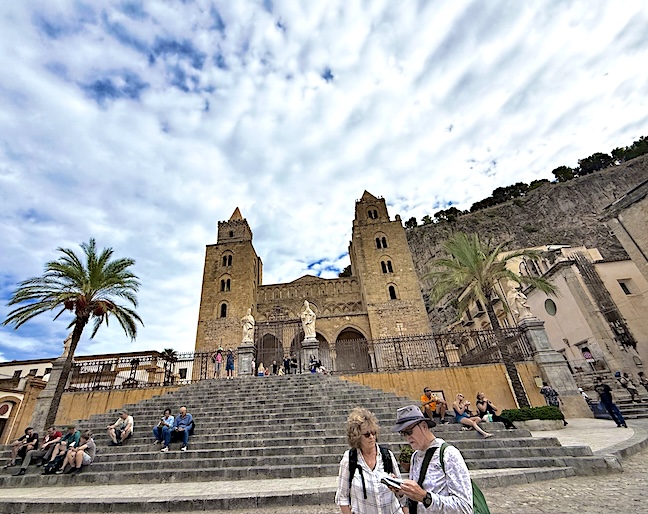
The Cefalu Cathedral was commissioned in 1131, but the actual completion date is sketchy. Norman, Arab, and Byzantine architecture is blended into the tall towers, narrow windows, and battlements that give it a dual purpose as a fort. Unfortunately, it was closed, hiding the mosaic of Christ Pantocrator, deemed the most elegant in Sicily.
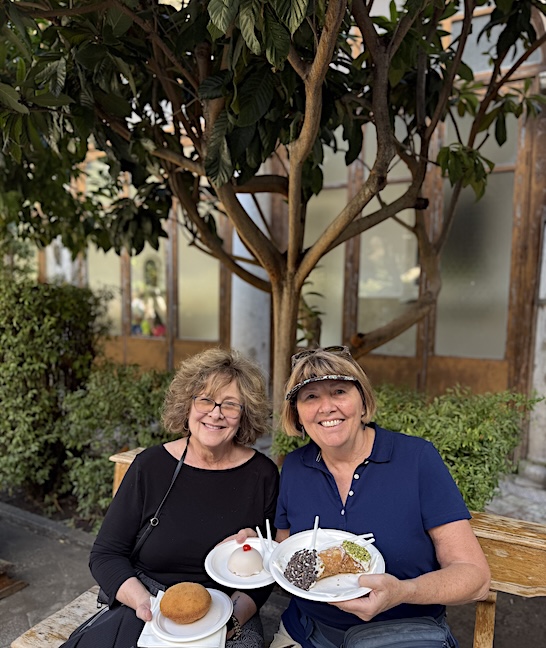
Back in Palermo, we returned to the Dominican convent the statue-altering nuns vacated and sampled pastries made from the nuns’ recipes called “The Secrets of the Cloister.” The white half-dome with the cherry nipple is called Tette delle Monache, or Nuns’ Breasts.
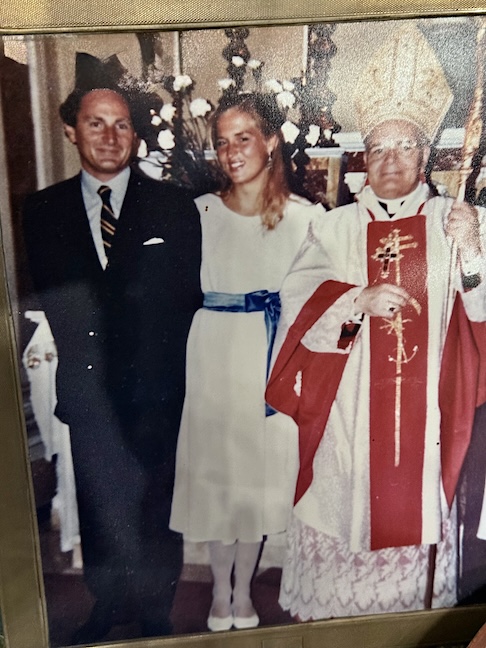
On October 13, we met our Rick Steves tour group. We visited the 800-year-old Arab-Norman Palazzo Federico, where the Contessa gave us a tour of her home and explained that she married the Conte very young, with no idea how to be a proper Contessa. When the perks of nobility ceased to exist, the cost of keeping up the palace meant the royals had to earn their own money. The Contessa was full of infectious energy, delightfully candid, and funny.
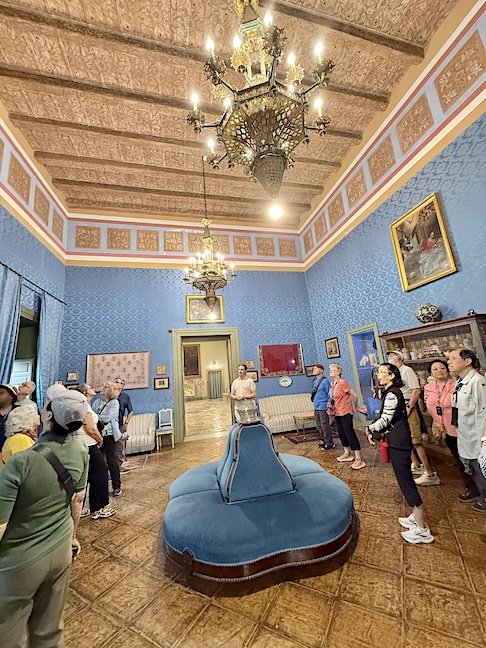
The Contessa was bicycling across town from her teaching job when her son started our tour of the 15-room palace. He told us his mother bought the circular sofa in the Blue Room because she liked it, and later found out it was the type of seating favored in the entry halls of brothels.
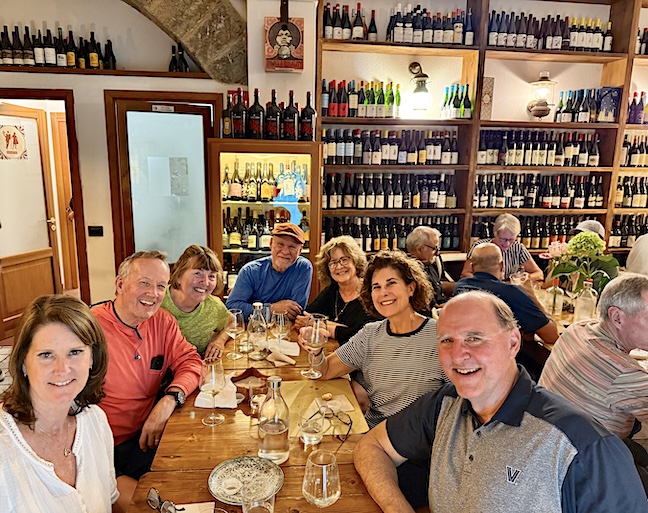
Our first group dinner at Ristoro La Galleria Eventi was a great success. We got to know each other better and discovered that everybody was fun-loving. Our new friends turned out to be delightful to travel with!
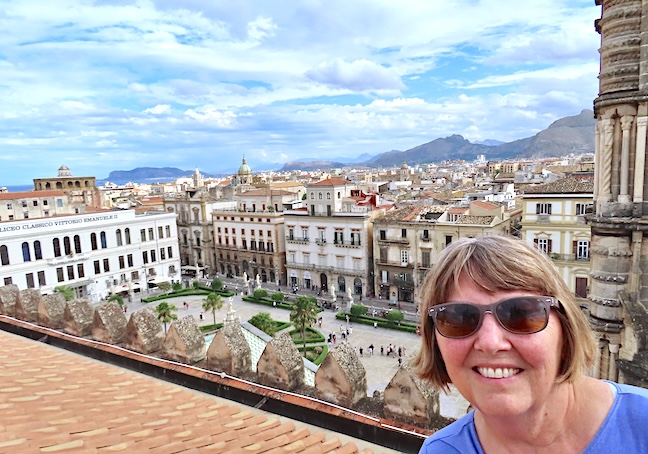
Polermo’s population is 626,273, and it has all the problems big cities endure, like poor rubbish management, graffiti, overcrowding, and petty crime. We stuck to Centro Storico, the heart of Palermo, where the majority of historical landmarks and tourists are found. The people were friendly, the streets were well lit, and we never felt like we were in danger day or night. It’s important to use urban awareness, but this gritty city has too much to offer to pass it up. Ciau!