
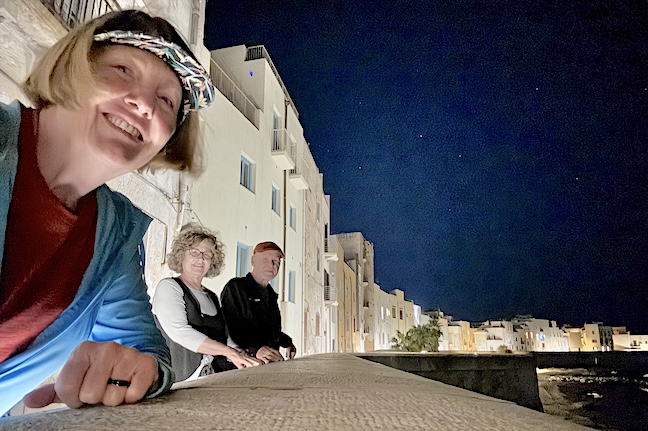
Trapani is a working port town. We stayed in the historic district that follows a hook-shaped seawall to Baston Conica, built by the Spaniards on the tip of the promontory that juts into the Mediterranean Sea. The fortification provided views up and down Trapani’s western coast, protecting it from sea invasions.
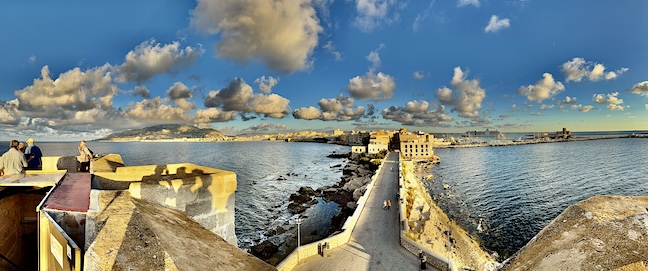
Today, tourists use the top of the bastion to take dramatic photos of Trapani’s walled shoreline and sweeping sunset views over the Med’s azure waters.
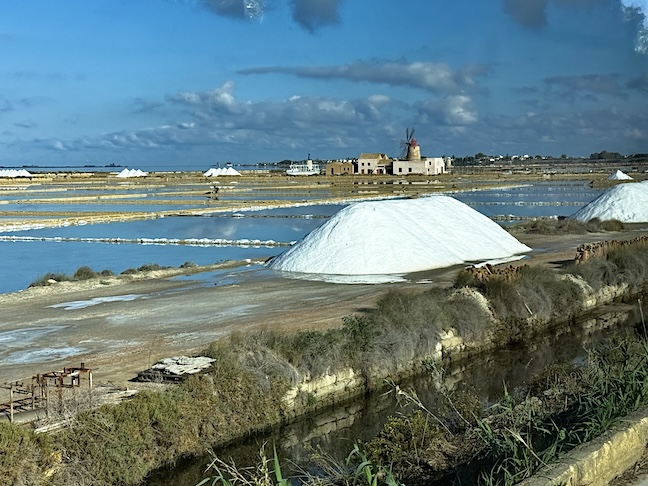
Salt production by the Phoenicians began 2,700 years ago in the Trapani salt pans. In the 1860s, salt exports exceeded 100,000 tonnes annually.
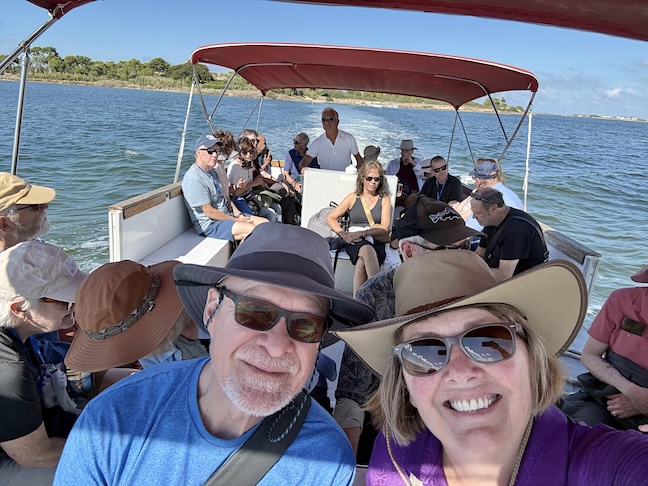
We crossed the shallow basin in a flat-bottomed boat to reach the Phoenician island of Mozia and the Salt Museum. The step-like ponds have decreasing depths to allow the sun and wind to evaporate seawater quickly.
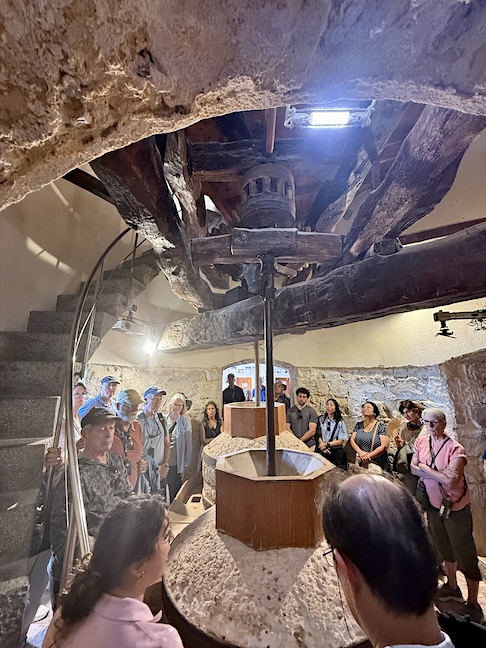
Windmills replaced animal power in 1750 to move increasingly salty water from basin to basin and grind salt. Harvesters collect crystals with wooden rakes, shovel them into wheelbarrows, and move them to large piles for pickup by trucks on the dividing levees.
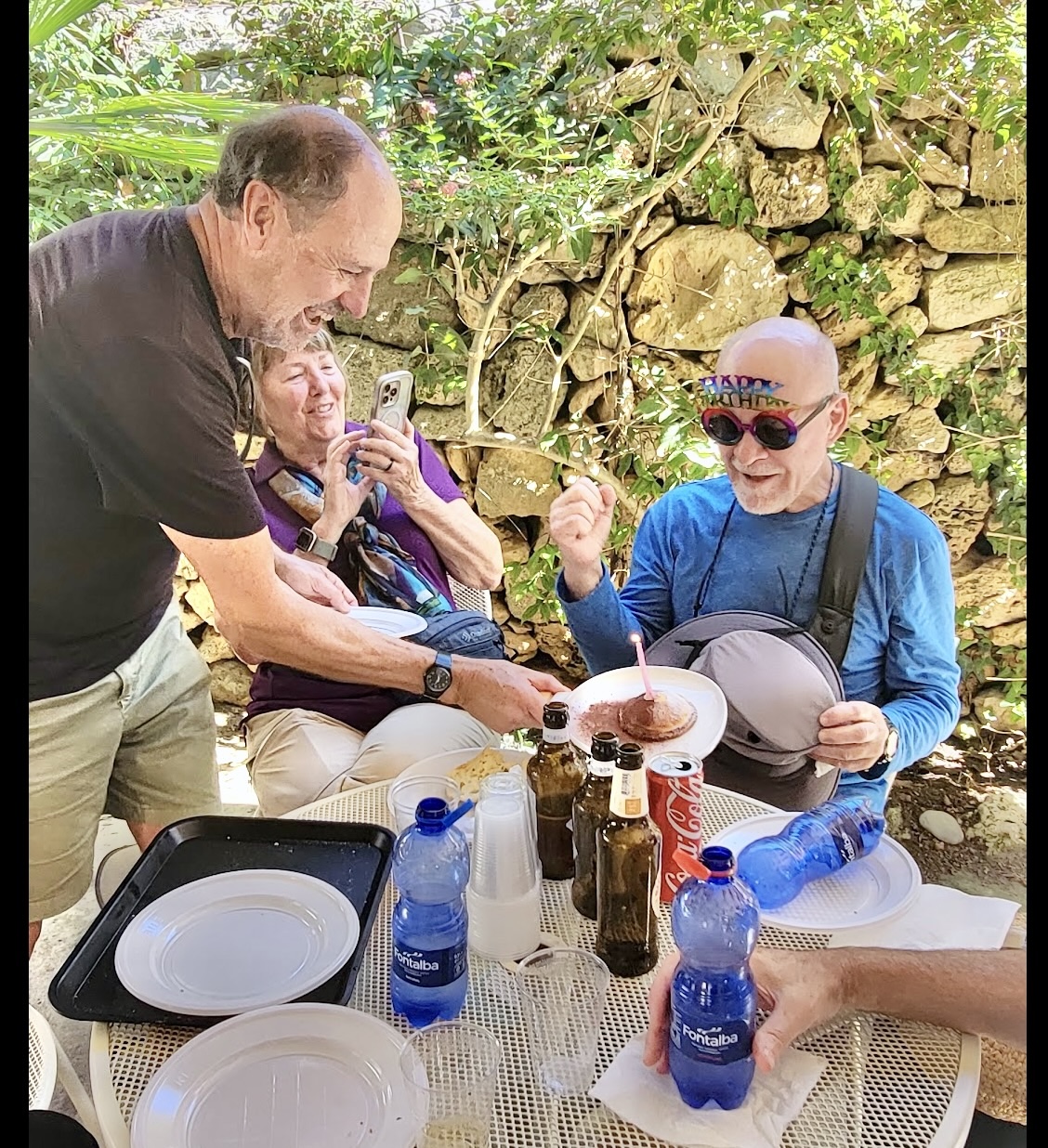
I did not expect to celebrate my 69th birthday on an ancient island in the Sicilian salt pans, but Karen did. Our Guide, Jamie, served me a pastry with a candle and our group sang Happy Birthday to me. Nice surprise!
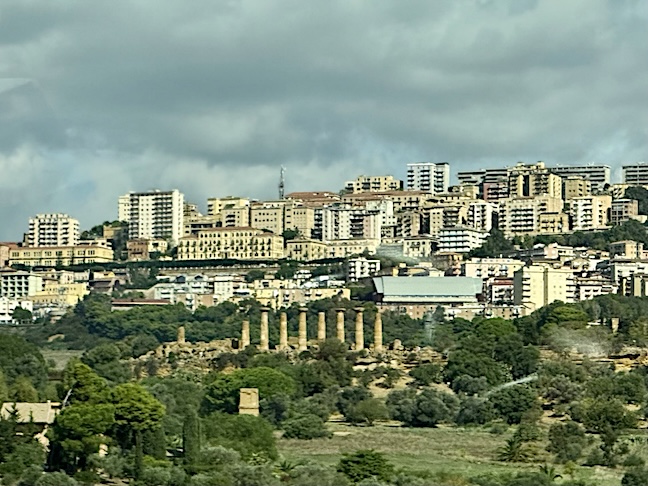
Agrigento was a Greek colony 2,500 years ago. The Valley of the Temples is really a ridge that contains the best remains of ancient Greek structures outside of Greece. We toured the museum and followed a local guide to all the temples.
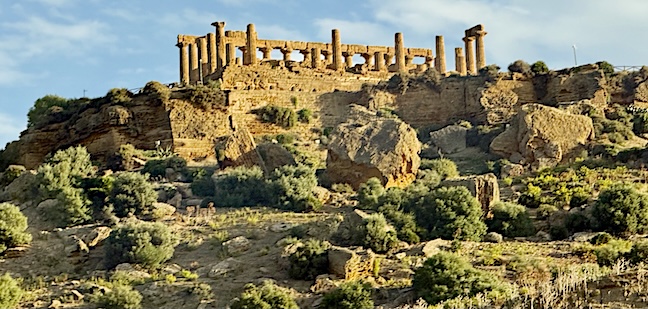
Fifteen Doric-style temples were constructed in less than 80 years. Above, the Temple of Juno (Hera) was built in 450 BC using 6 and 13-column sides. A dedication of these temples is not carved into the remains. Scholars have made guesses as to the deities they were created to worship.
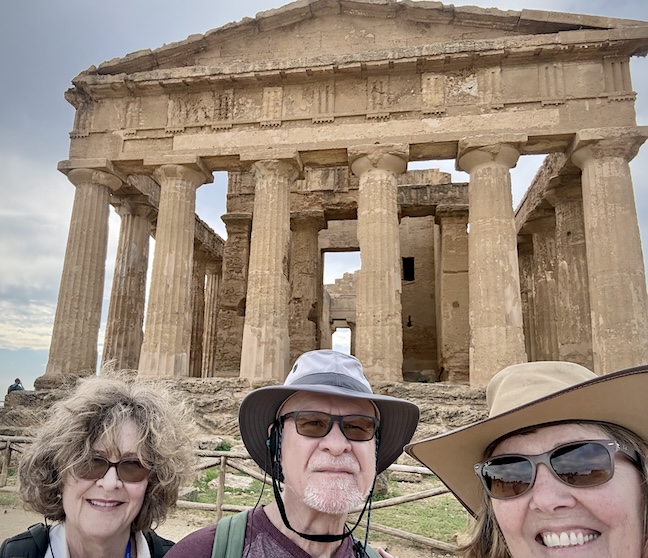
The temple of Concordia is one of the best preserved in Agrigento. Religious rites were performed outside of temples. Only priests were allowed to enter.
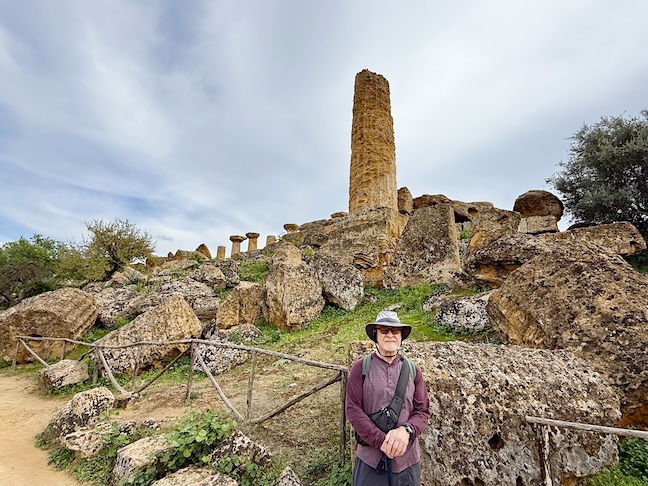
Many of the temples are just a box of rocks. Post-Greek conquerors tore them down; weather, earthquakes, and erosion damaged them, and some were rebuilt as churches when Pagan religions fell out of vogue. But the size and quality of pieces strewn about are still mind-boggling.
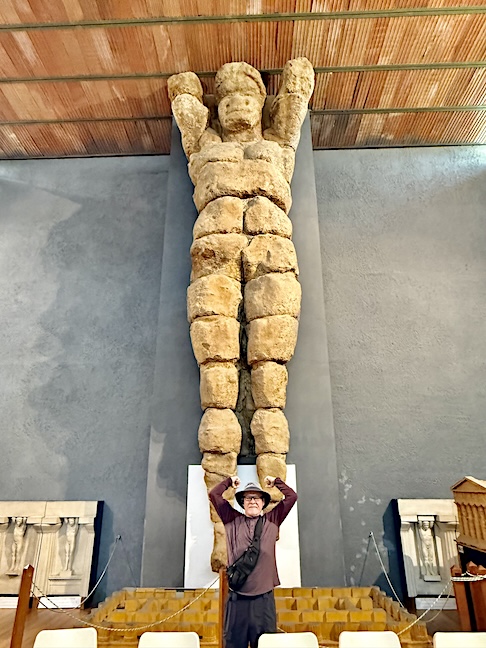
The Telamons of the Temple of Zeus were massive statues placed between columns that supported the roof. This one was reconstructed from rubble and placed in the valley’s museum.
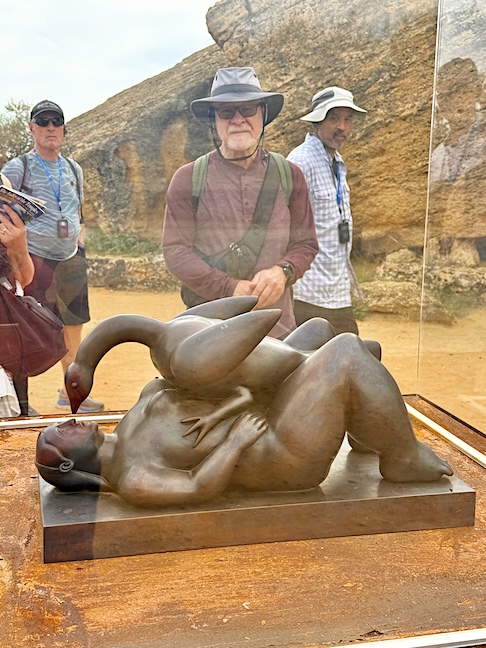
This art exhibit by Fernando Botero in the Valley of the Temples depicts the Greek myth of Zeus in the form of a swan seducing Leda, who later became a Spartan queen. She had sex with Zeus the goose and her husband, King Tyndareus, the same night, and then laid two eggs that became the twins Castor and Pollux.
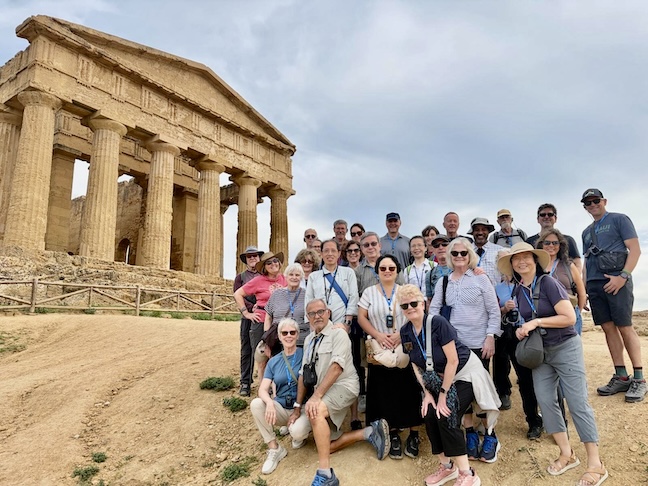
Sharing marvelous sites with our group made the experience richer. Tonight we’ll have dinner together and spend the night in a countryside hotel before forging ahead to Syracuse.