
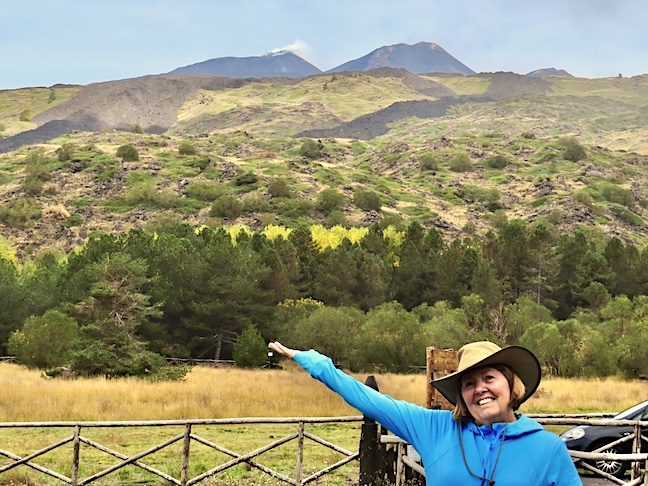
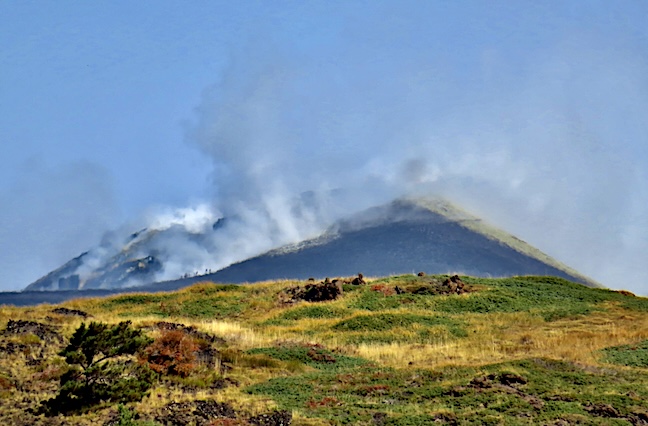
Mt. Etna is the highest and most active Volcano in Europe. The steaming mountain has four summit craters, more than 300 vents on its sides, and covers 459 square miles.
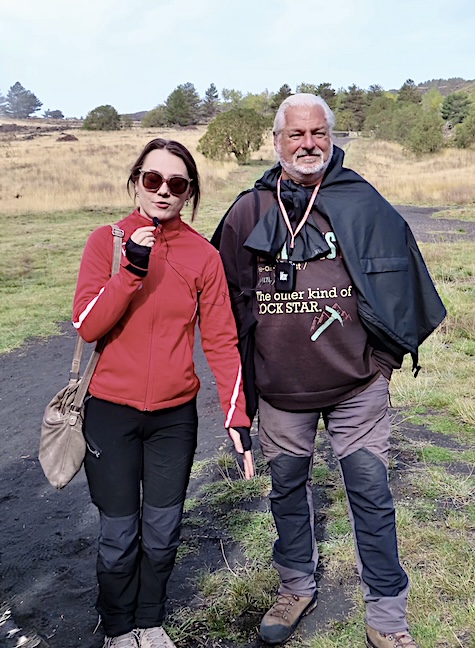
Our guide and his assistant are volcanologists on loan from the University of Catania. Mt. Etna is one of the most monitored volcanoes in the world.
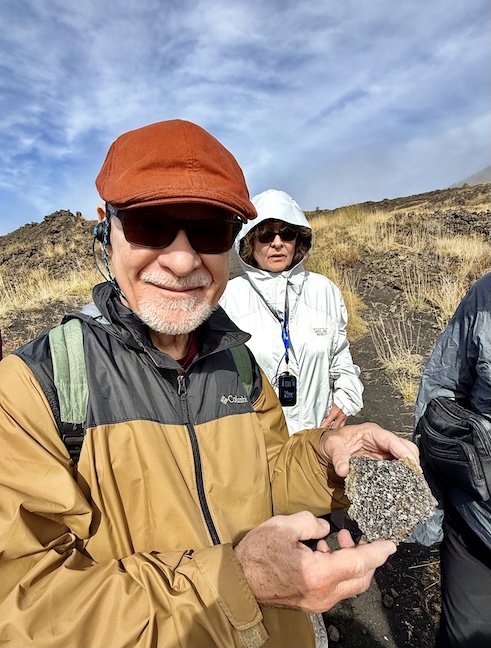
We learned that Mt. Etna is mainly made of basaltic lava rich in iron and magnesium. Variations in the magma chambers create subtle lava variations. Etna is prone to Strombolian eruptions, producing moderate bursts of gas and lava. Etna grumbles frequently, with violent blows much farther apart.
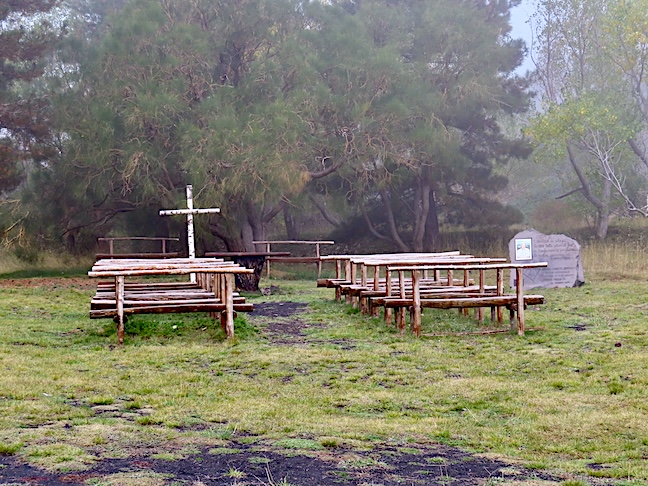
Mt. Etna has spawned many myths, legends, and religious connotations. This simple church setting at the base of Etna has what looks to be the most uncomfortable pews ever built. I believe pews are made to be agonizing to keep people from nodding off in them, as if a physical threat to comfort is needed while worshipping on a volcano that could blow its top at any time.
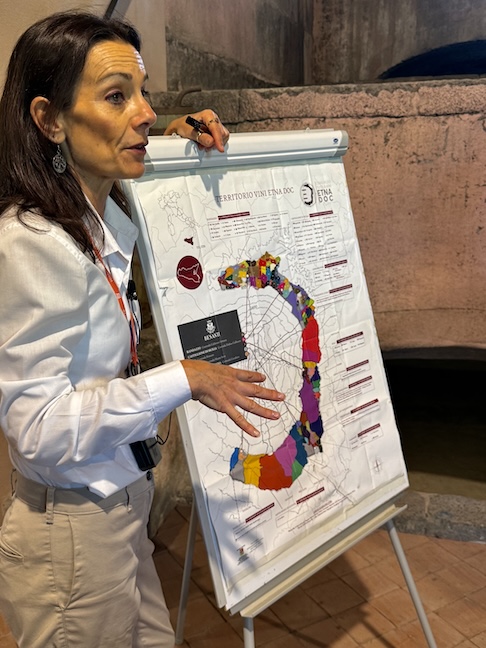
Etna’s prolific spread of mineral-rich ash and lava rock that weathers into rich soils contributes to the incredible wines made on its lower slopes. At the Benanti winery, our host points out the half-ring of varying microclimates and soil compositions around Etna that creates so many different wine varieties. Drinking wine also helps people fret less about the volcano discharging.
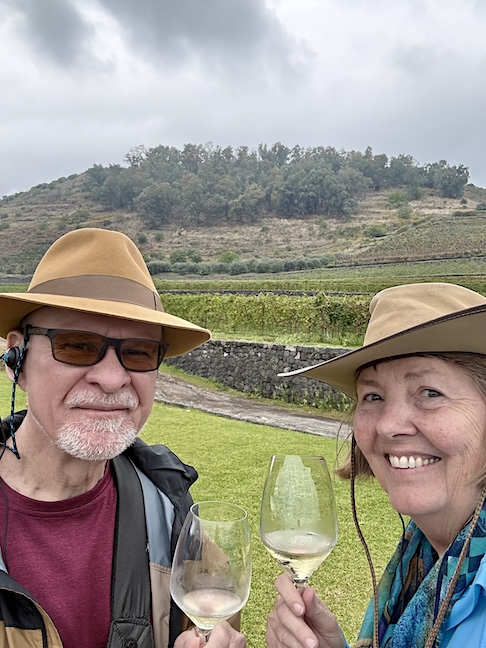
Benanti Winery was founded in 1988, making it a pioneer in the Etna wine region. They make Etna White Superiore Pietra Marina with ancient Carricante white grapes that’s known as the best white wine in Italy.
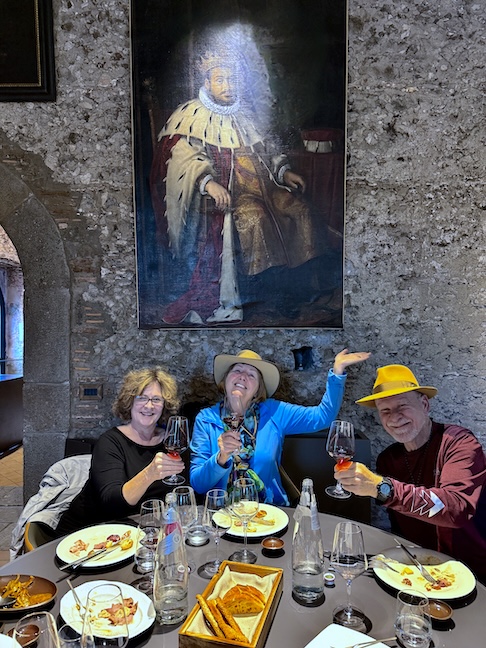
Benanti’s selection of five wines, paired with local food specialties, made us all believers in their handcrafted vintages. A saluti!
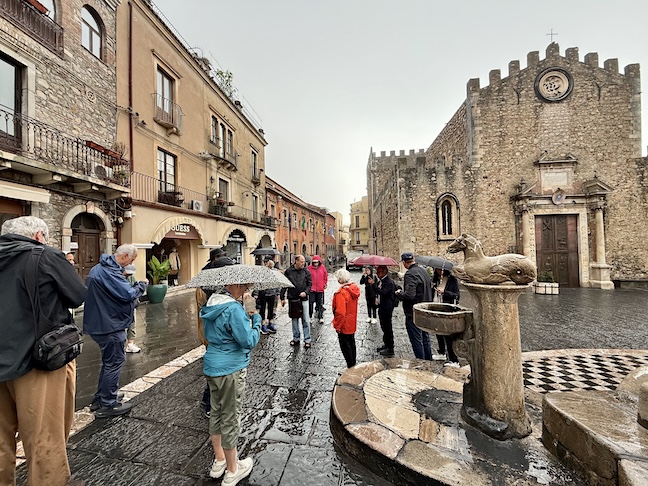
Our orientation walk in Taormina was wet, but we were in high spirits and relished the scenic town’s charm that was showcased in HBO’s series The White Lotus.
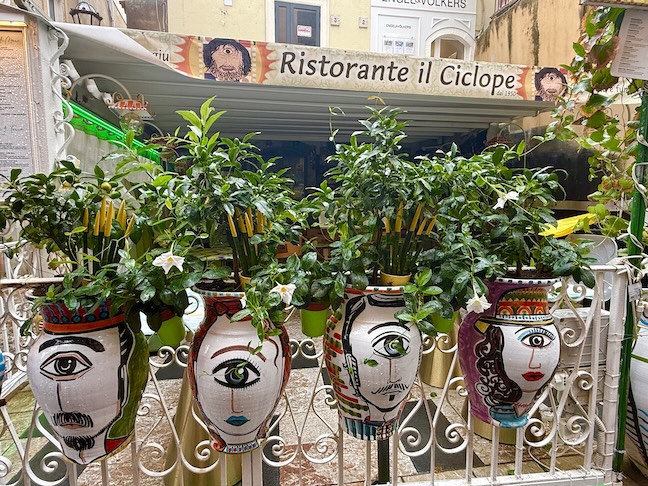
According to Sicilian legend, the Cyclops, Polyphemus, lived near Mt. Etna. The one-eyed guy fell in love with Galatea, but she chose a different shepherd, so Polyphemus smushed him with a rock. Odysseus put the Cyclops’ eye out during his return home in Homer’s Odyssey and fled Polyphemus’ hail of rocks by ship. The monocular theme is popular all over Sicily.
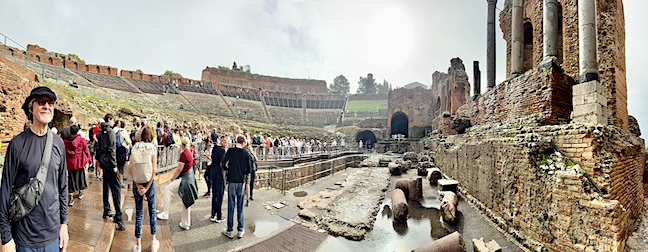
Taormina is perched on the side of Mount Tauro. Its streets are steep up-and-down trudges, except for the main drag, Corso Umberto, which is mainly flat and takes about 10 minutes to walk from end to end. Turn right at the NE end onto Via Teatro Greco, which ends at the Greek-Roman Theater.
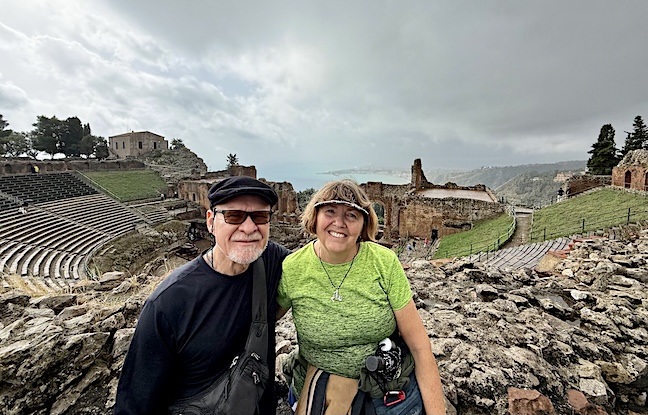
The Greeks built the theater in the third century BC. The Romans took out the orchestra to create an arena for 10,000 spectators. The theater is still used today for concerts, plays, and cultural events.
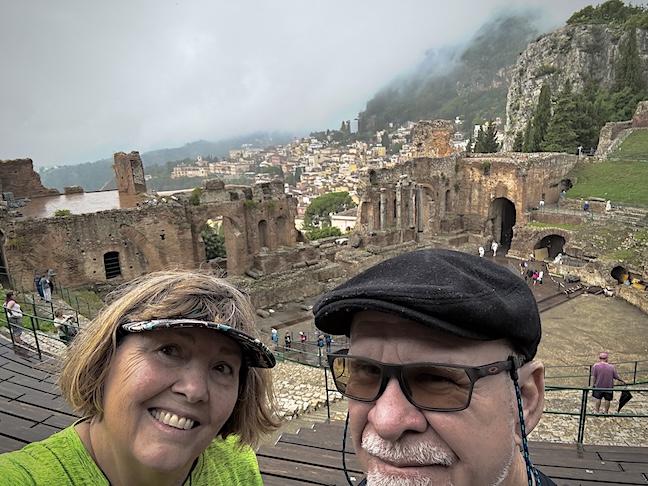
With a panoramic view of the Ionian Sea, Mount Etna, and Taormina, the theatre is a top attraction in Sicily.
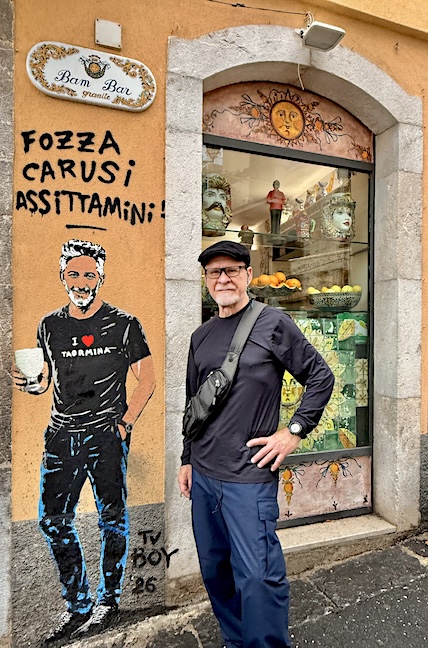
Traipsing around in ancient arenas is thirsty business. We stood in line for Sicilian granita and warm brioche, a Sicilian breakfast favorite and Bam Bar speciality. Grainy and icy, the granita is made with sugar, water, and flavorings from fruit juice to coffee. Bart Simpson’s Squishy is a modern granita cousin.
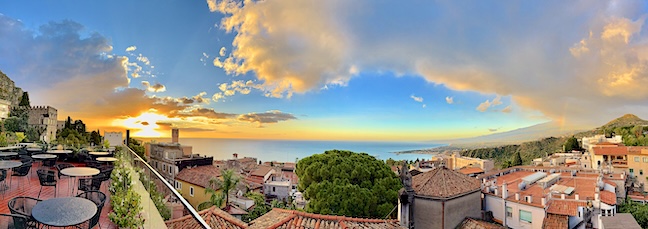
The rooftop view from our Hotel Continental Taormina was spectacular. We ate breakfast here and enjoyed evening libations.
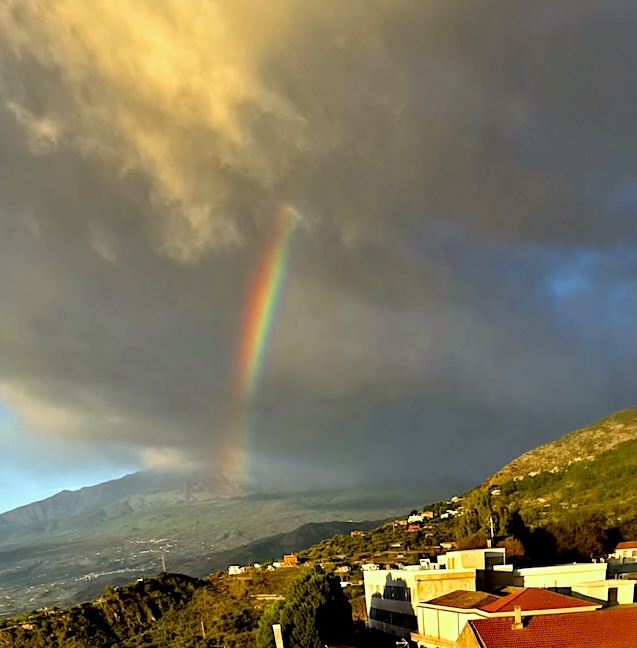
The hotel’s staff and our guide Jamie have enjoyed the rooftop view many times over lots of years, but none of them had ever seen a storm cloud pour a rainbow out on Mt. Etna. What a treat.
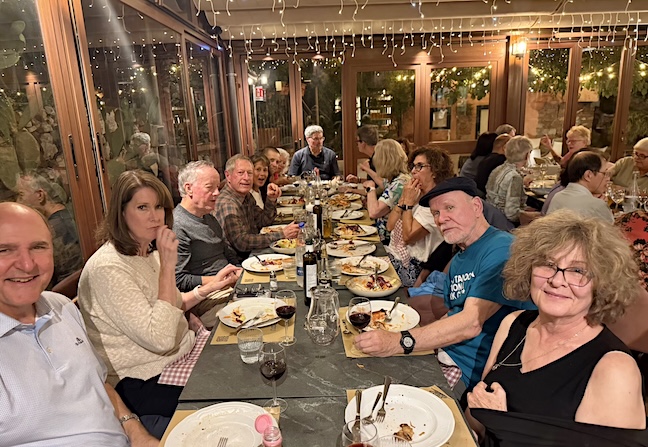
We ate a Sicilian pizza dinner as a group in Taormina, which is always fun.
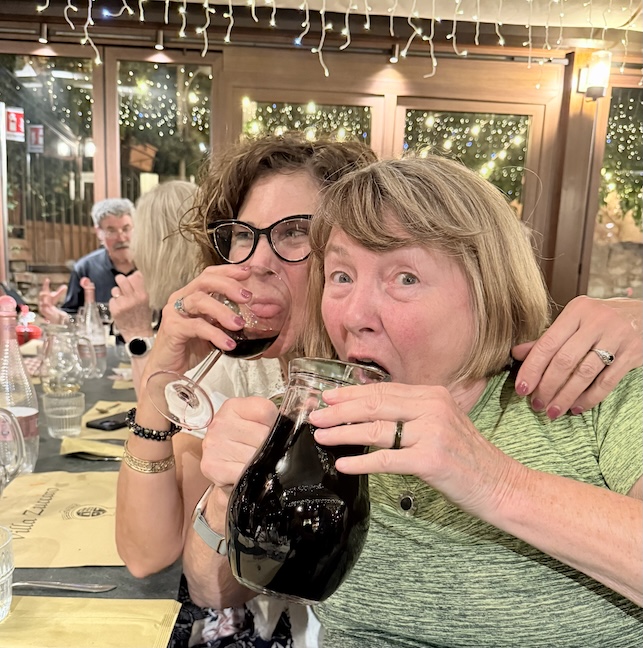
Karen and her new friend Kathryn are dangerous together and prone to making sure everyone is having as much fun as they are.
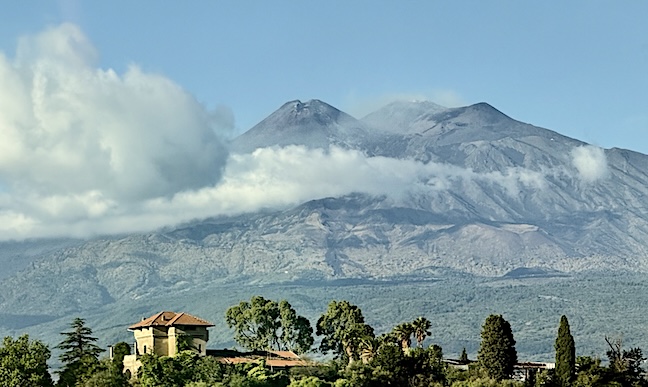
Hanging out in Mt. Etna’s shadow was a blast. Now, I get why people would choose to live by such a dangerous beast. The benefits are worth the risk, at least for a vacation visit.