
Our bus left Oslo early. We headed for the mountains and made our first rest stop at an Open-Air Norwegian Folk Museum with sod-roof farmhouses, small village storefronts, and artisans working in their shops.
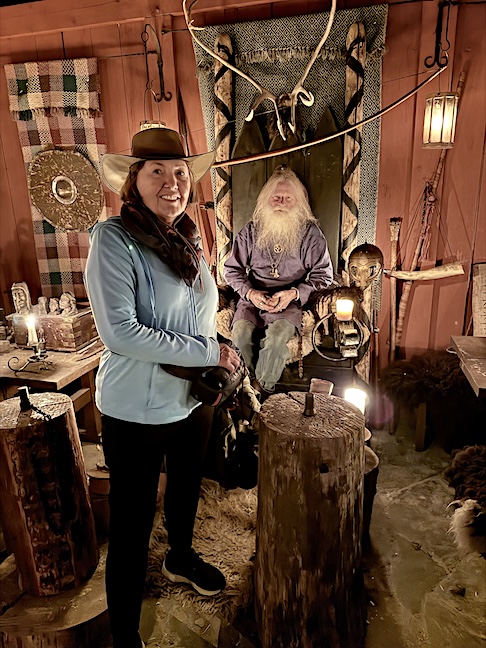
It’s an old Nordic custom to visit the Village Elder first when arriving in his small community. The Elder welcomed us and gave his blessing to roam freely.
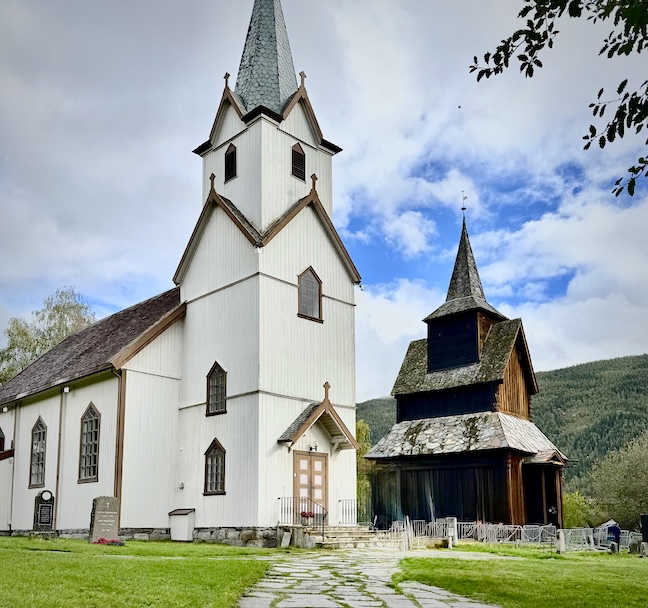
There are only 28 out of an estimated 1,000 wooden medieval Christian stave churches that survived past the Black Death in 1349. The churches utilized post and lintel construction with vertical plank walls.
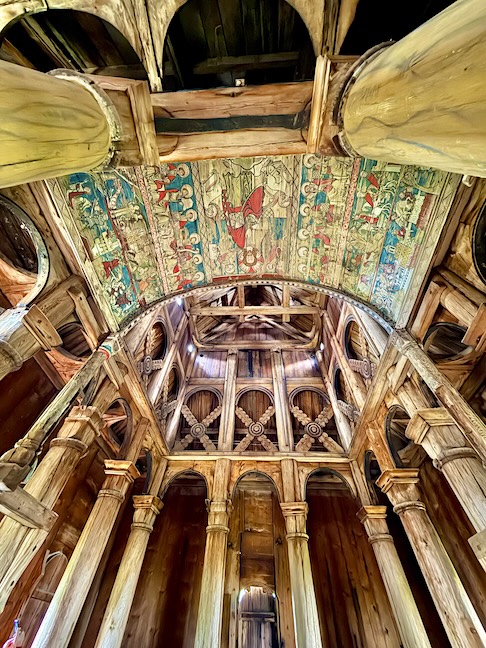
After our lunch next door, our guide Heidi found a member of the new church who let us inside the stave church to examine the exotic woods and craftsmanship.
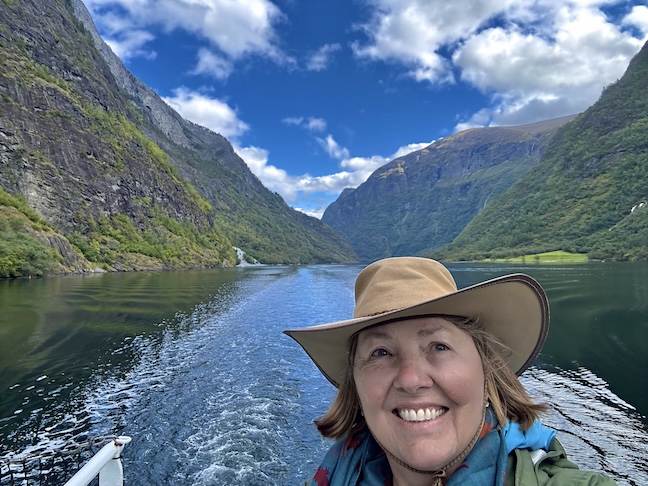
We took a 2-hour cruise on the ferry in Norway’s longest and deepest fjord, Sognefjord.
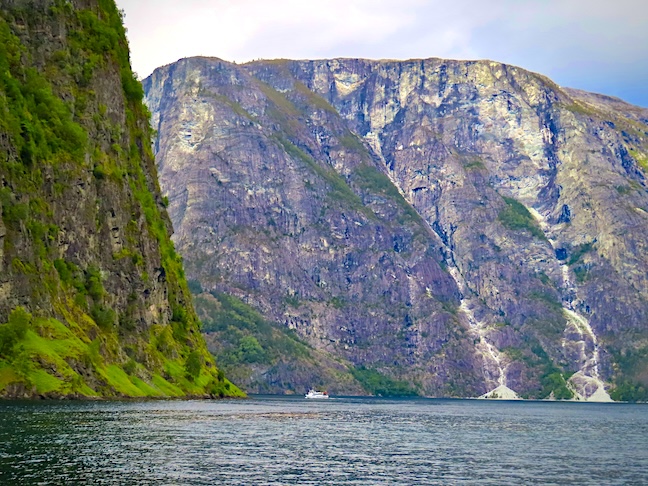
Sognefjord’s towering metamorphic rock sides were shaped by glaciers about 400 million years ago and were adorned with dozens of waterfalls.
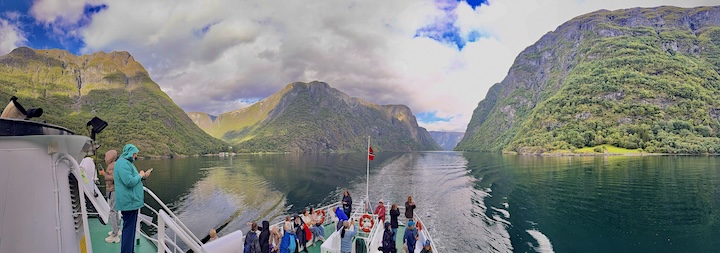
It was cold and cloudy, with gusty winds, during our boat ride, but I remained anchored to my viewing point on the upper deck and could not leave to warm up inside. I’ll never forget how mesmerizing the fjords are.
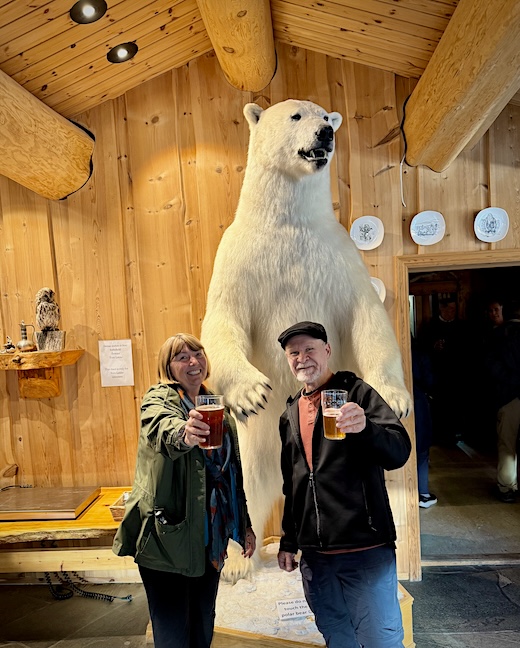
We spent the night in a rustic mountain hotel that looked like a remote hunting lodge. There was no place to go after dinner. We noticed that the front desk was selling hot-pink cowboy hats and asked why.
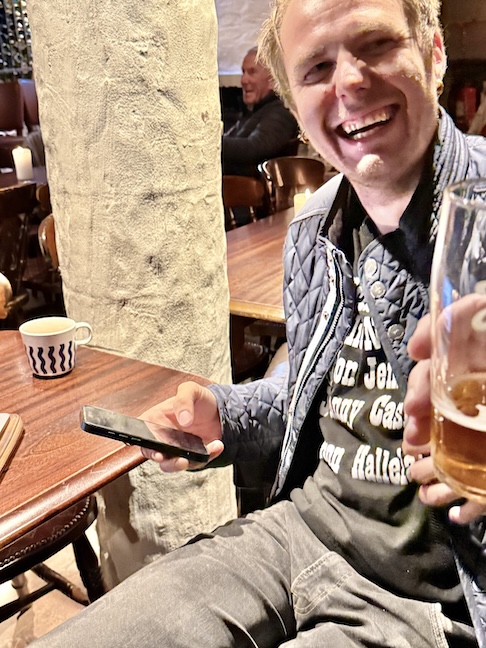
We found out that the Norwegians love American country and western music. A local band was performing in the basement. That’s where we met Bad Brooks, the “Arctic Cowboy.” Brooks was headed to Nashville about the time we would return to Tennessee and we invited him to visit our home and offered some tips on venues in Chattanooga that might put him to work. Hearing famous C&W songs sung in Norwegian was pure gold.
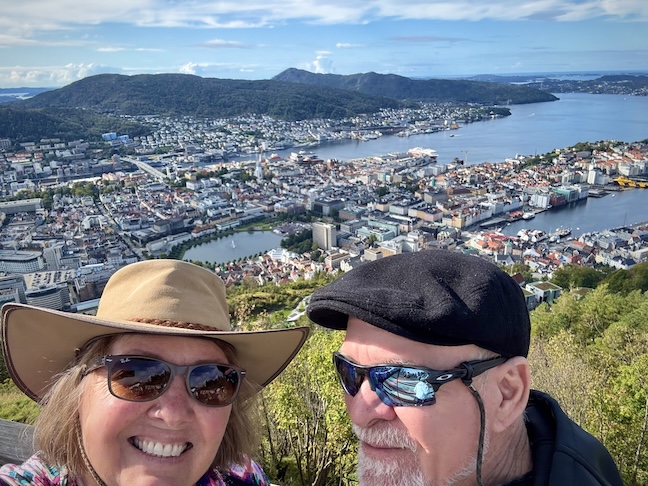
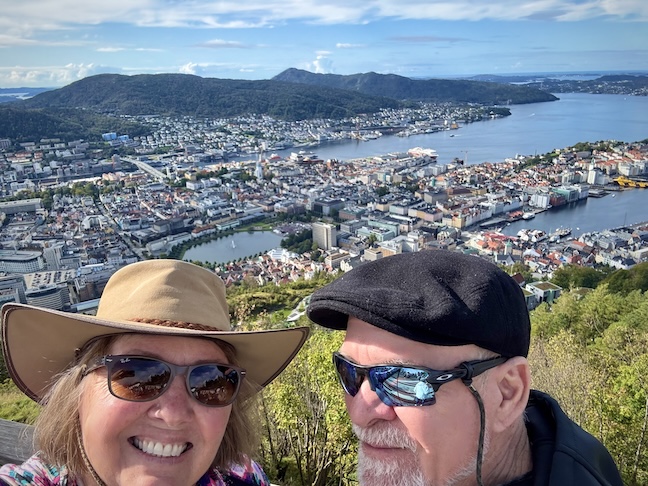
Bergen is beautiful and we had days with sunshine, but Bergen is also the “rainiest city in Europe,” with an average of 98 inches of rain and 239 rainy days per year. We enjoyed a clear day when we took the Ulriksbanen or Cable Car to the top of Mount Ulriken.
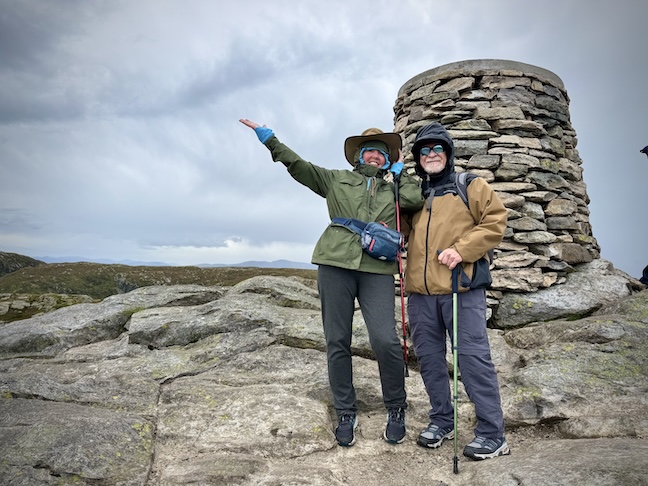
We were not as weather fortunate when we took the Fløibnanen or funicular tram to the top of Mount Fløyen. During our one-hour hike, with an elevation gain of 1,050 feet, from the tram stop to the highest point on Mount Fløyen it poured rain, it was blustery, and made us question our perseverance.
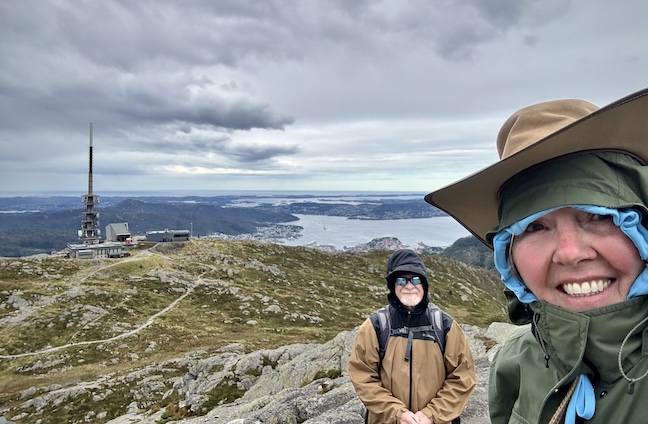
Views from the top are usually worth the effort to hike there.
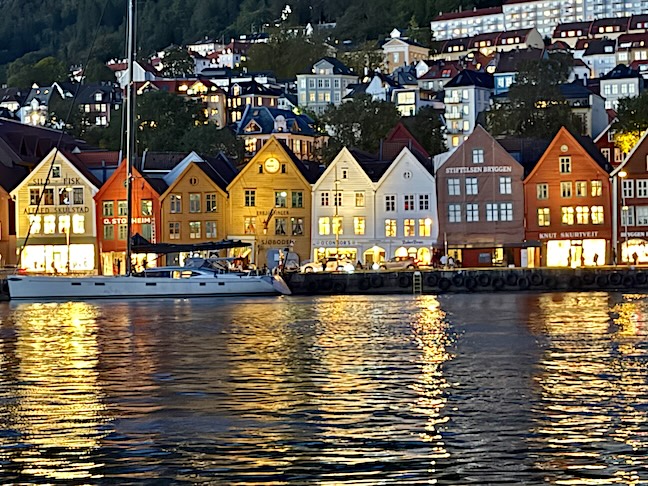
Fires have ravaged Bryggen, the ancient wharf of Bergen, since its trading empire days from the 14th to the 16th century. Rebuilding has adhered to the old patterns using traditional construction methods. The charming structures lean on each other, forming a lively strip of shops and restaurants with outdoor seating and music, perfect for relaxing afternoon meals and lively evenings.
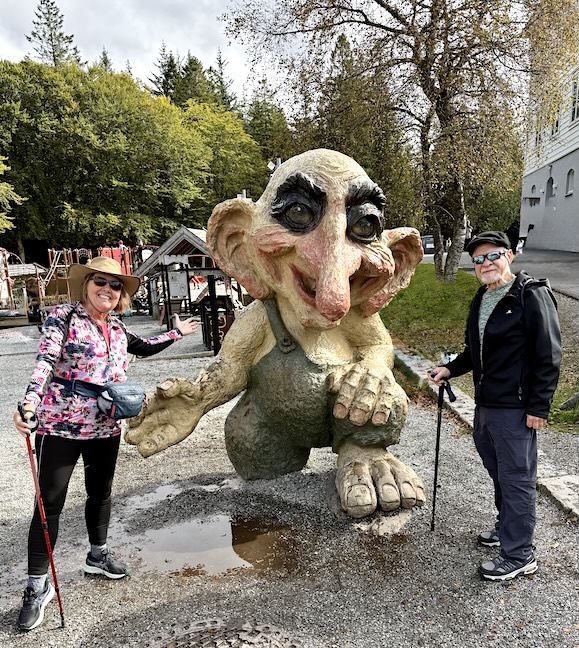
Norwegian trolls have become cultural icons and are featured in their myths and legends. On our hike to Skomakerdiket Lake, we encountered dozens of men, women, and children who were wet and muddy. They were competing in a troll race where contestants searched for hidden trolls on land and in the shallow waters.

It’s impossible to avoid troll mania, so we dove right in at the interactive Troll Museum.
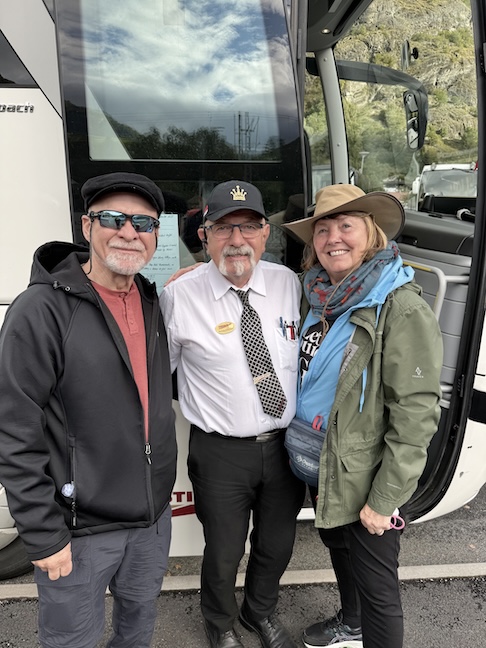
We said goodbye to our new Rick Steves tour friends and our incredible bus driver, Pinge. We gave Pinge a Crown Subaru cap from our dealer in Chattanooga and told him he was the “King of the Road.” He wore it proudly.
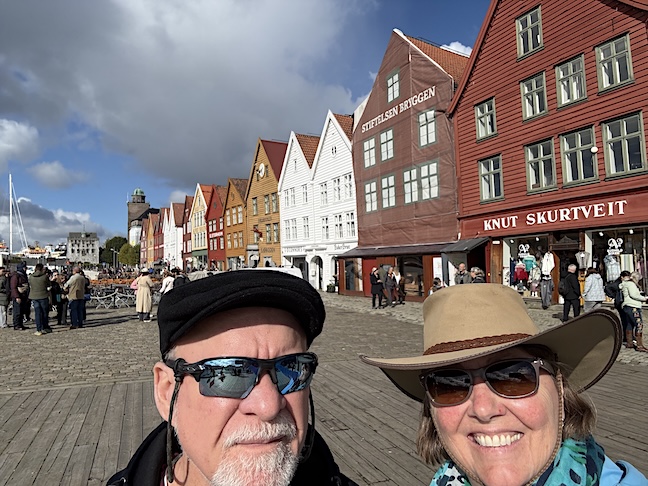
We were not done with Norway. After our fantastic Scandinavian Tour ended, we flew 749 miles north to Tromso, which is 217 miles north of the Arctic Circle, making it one of the farthest northernmost cities in the world. Why? For a chance to see the Aurora Borealis or Northern Lights.